Last updated November 21, 2026
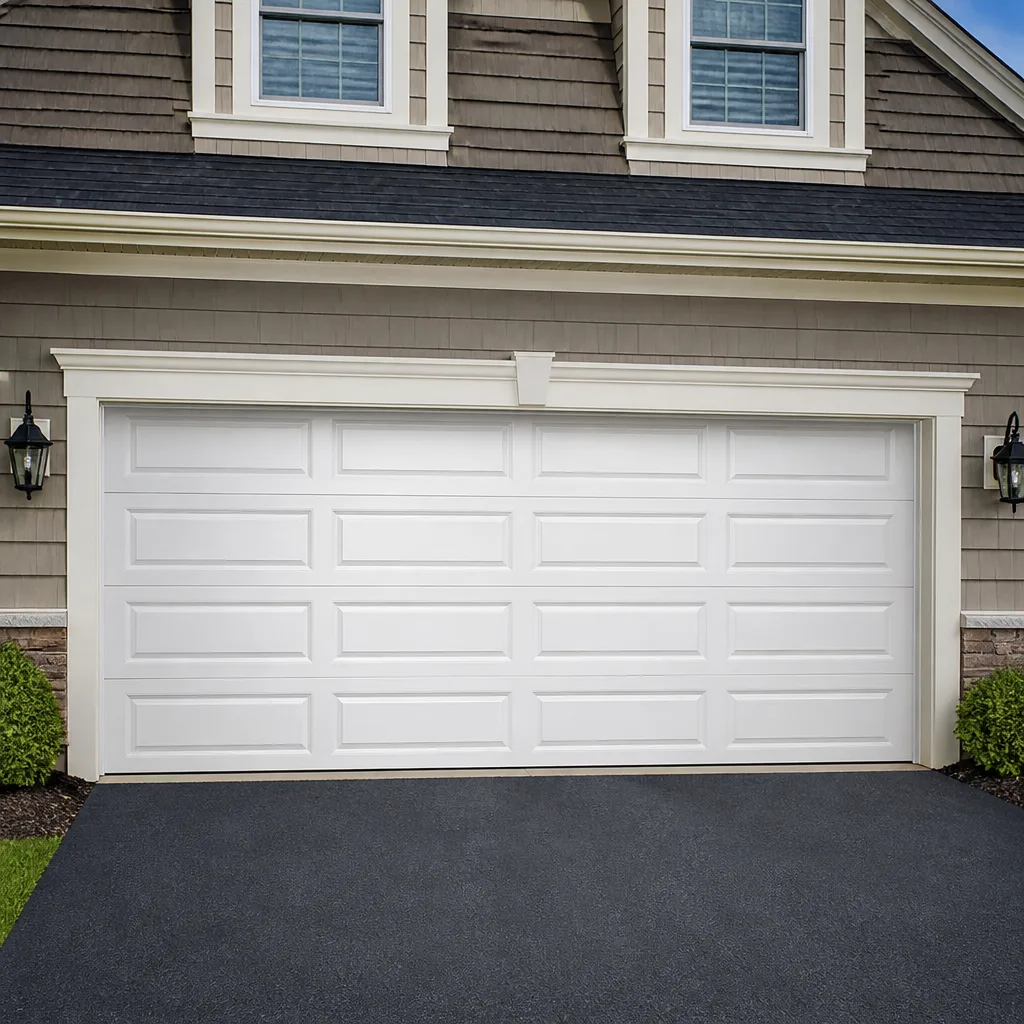 Raised-panel steel
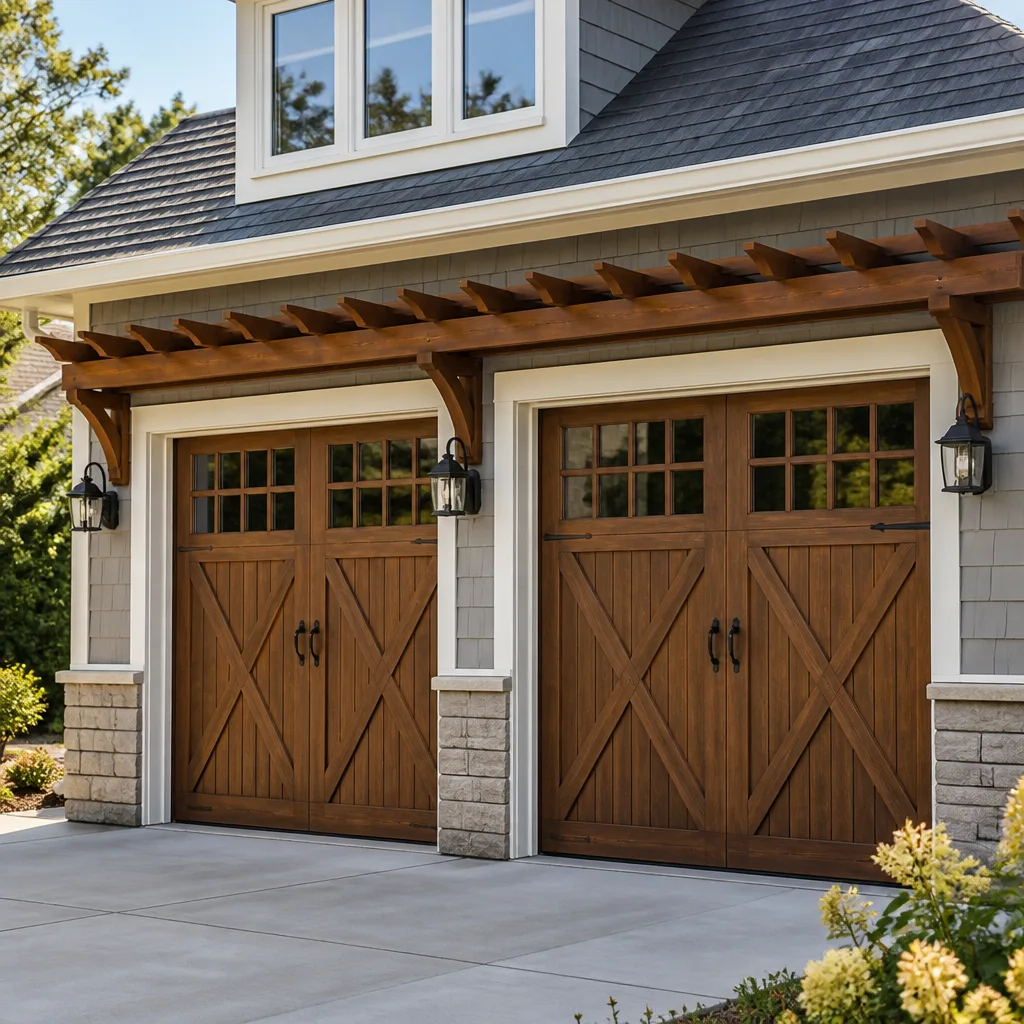 Carriage house
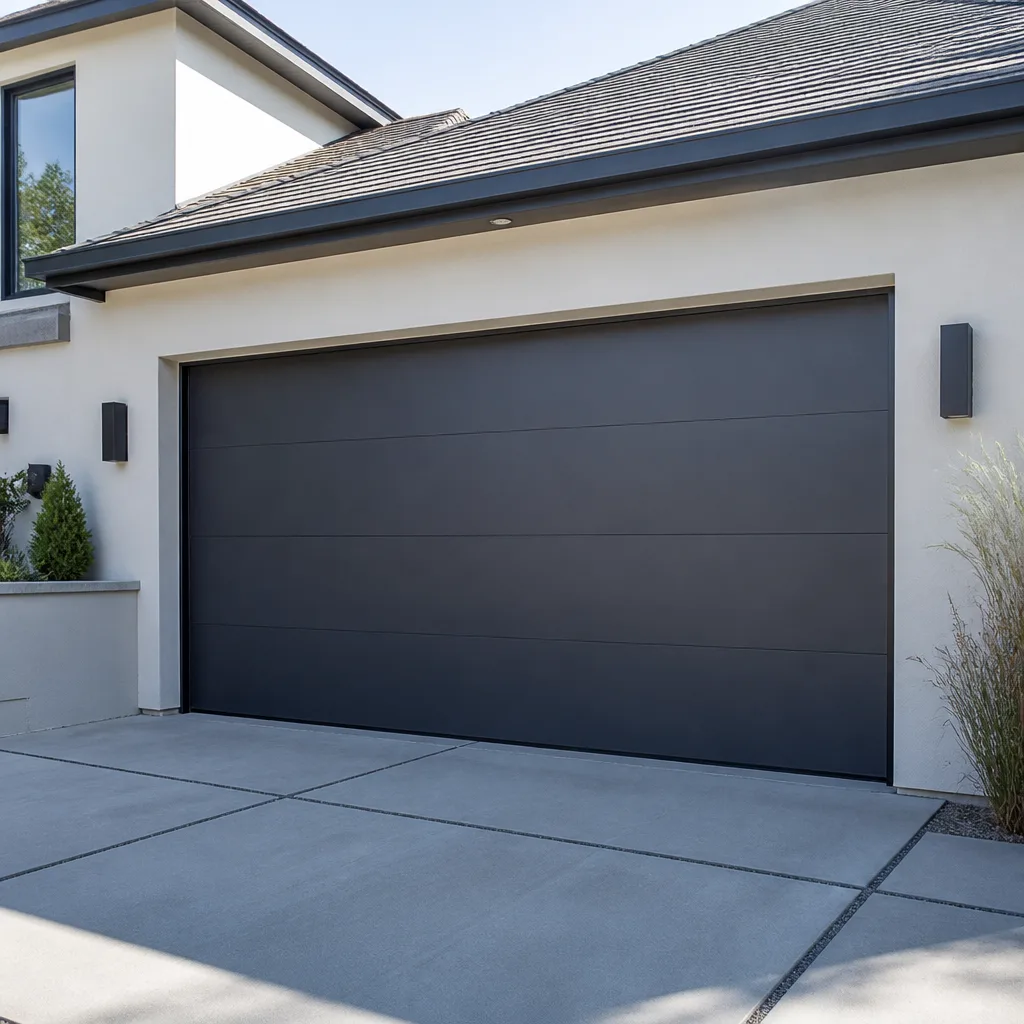 Modern flush
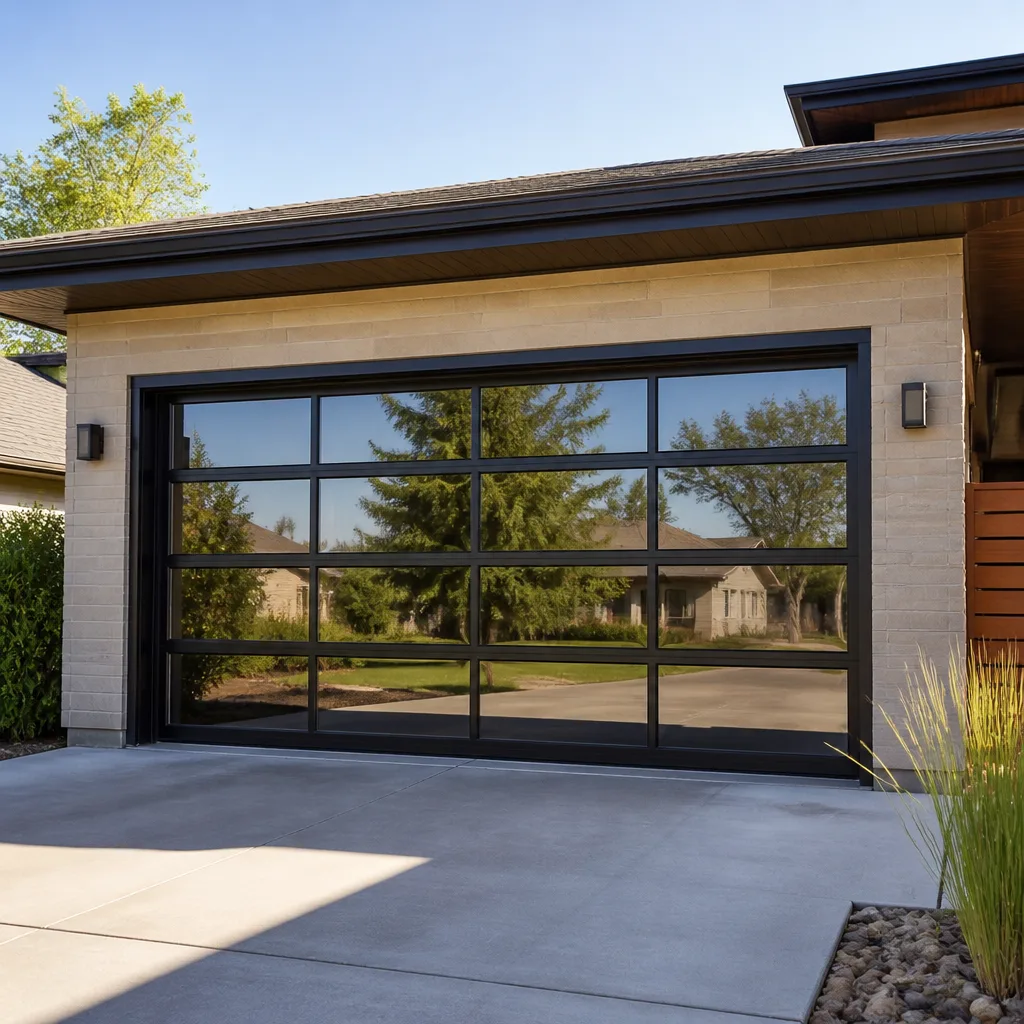 Full-view glass
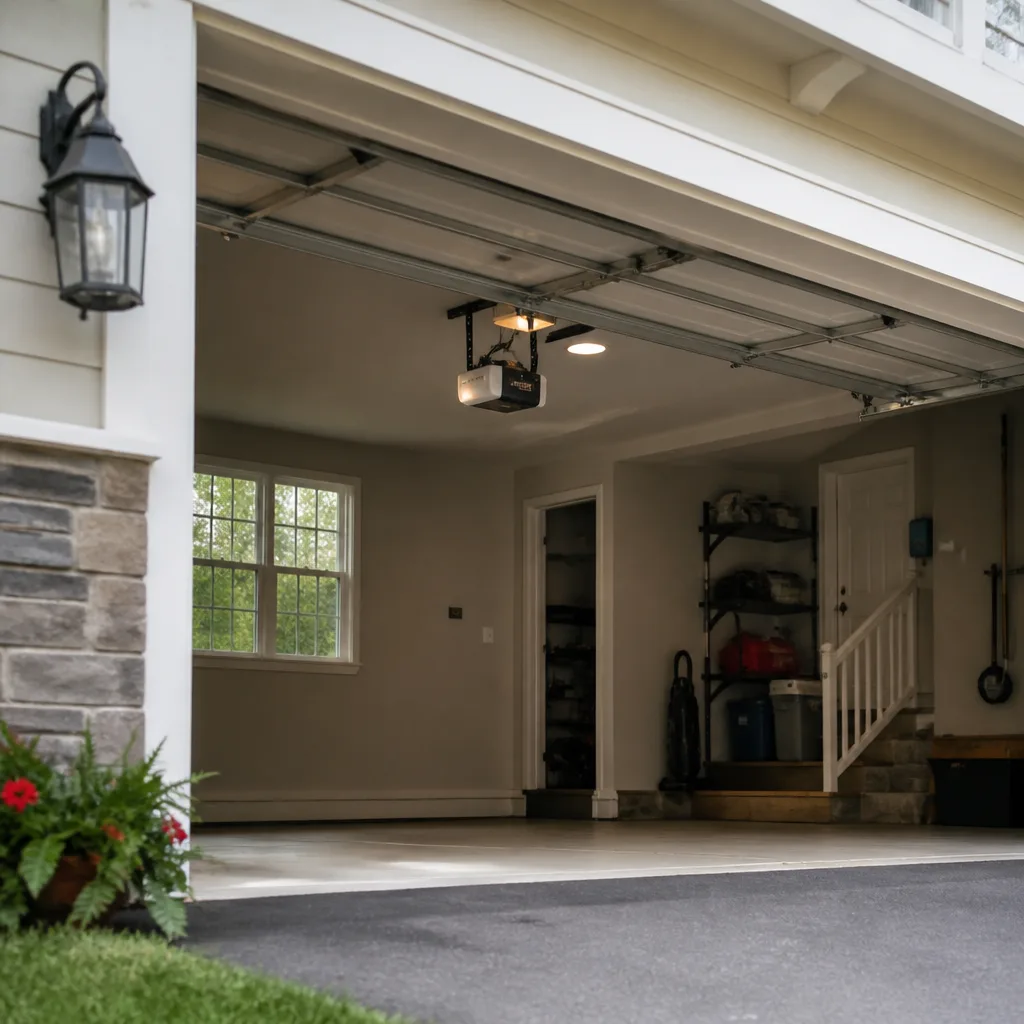 LiftMaster openers
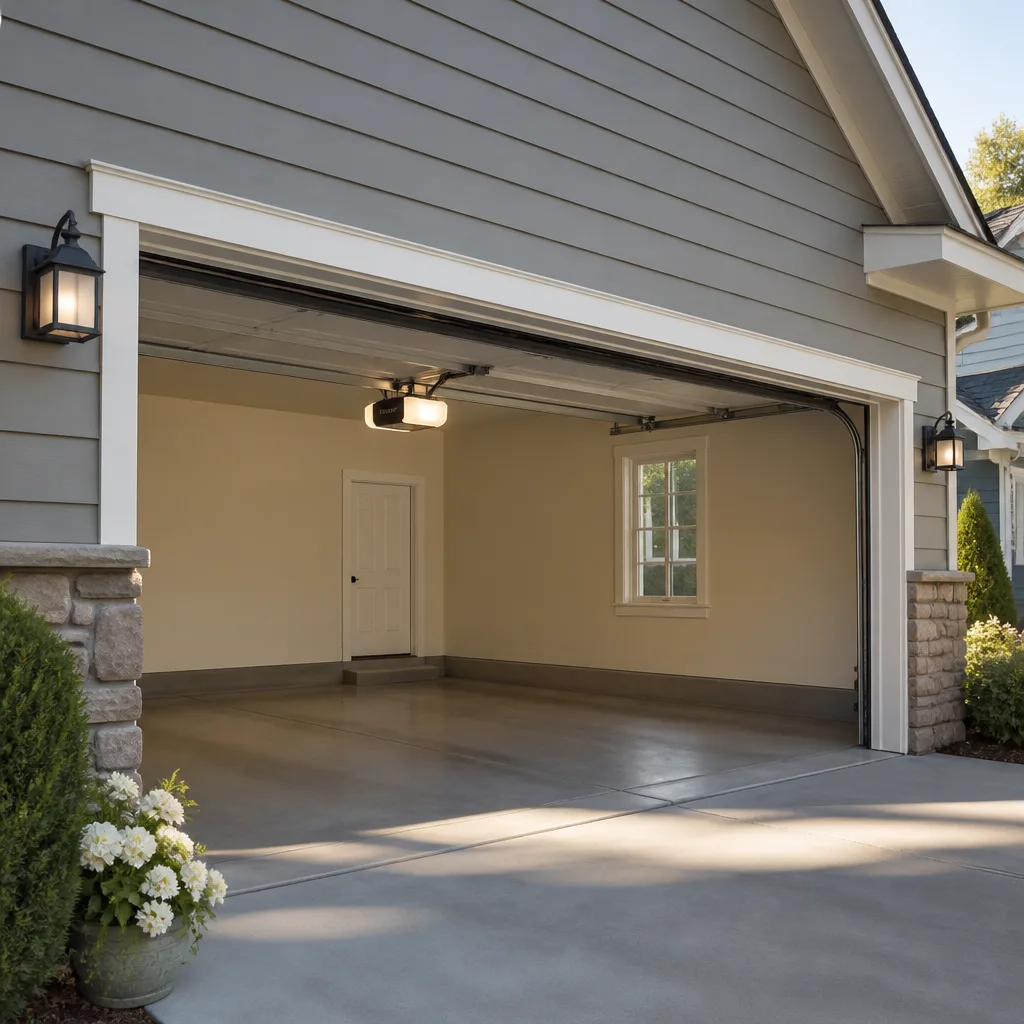 Chamberlain openers
Full 25-point door and opener safety check with every visit - springs, cables, rollers, tracks, and your LiftMaster or Chamberlain opener included
You get a price before we start. It does not change when the pro arrives.
Get your free estimateGarage Door Repair Maintenance Checklist for Tallahassee Homeowners
Lubricating your tracks every six months is on every maintenance list you’ll find online. What’s not: checking for rust-pitting on the torsion spring coils, which the humidity in Tallahassee accelerates to the point where a spring rated for 10,000 cycles can fail far short of that rating. A checklist written for a dry northern climate will miss the three tasks that account for most garage door failures here – corrosion, storm-season water intrusion, and heat-related opener faults. This guide sequences maintenance by what actually breaks in Tallahassee, not what looks good on a generic PDF. You’ll get monthly, quarterly, and annual tasks, the lubricants that hold up in our pollen-heavy springs, and the inspections that catch a spring before it snaps under load.
Quick Answer
A realistic garage door maintenance routine in Tallahassee runs on three tiers: monthly visual and safety checks (springs, cables, rollers, balance), quarterly lubrication and weatherstrip inspection tied to our rainy season, and once-a-year opener force and safety-reverse testing plus hardware tightening. The single most important habit here is inspecting torsion spring coils for rust – humidity drives corrosion, and corroded springs snap without warning. Everything else is cheap prevention compared with a failed spring, bent panel, or water-damaged floor seal.
Styles & brands we work with
- Raised-panel steel
- Carriage house
- Modern flush
- Full-view glass
- LiftMaster openers
- Chamberlain openers
Table of Contents
- Why a Tallahassee Garage Door Checklist Looks Different
- Monthly Checks: The 10-Minute Walk-Around
- Quarterly Tasks: Lubrication, Weatherstripping, and Storm Prep
- Inspecting Torsion Springs for Corrosion Before They Snap
- Opener Sensitivity and Force-Limit Testing in Florida Heat
- The Right Lubricants for Tallahassee’s Grit and Pollen
- Annual Deep Checks and When to Schedule Professional Service
- What Garage Door Maintenance and Repair Cost in Tallahassee
Why a Tallahassee Garage Door Checklist Looks Different
Most garage door maintenance guides are written for a climate with hard freezes and dry summers. Tallahassee has neither. What we have is warm, humid air for most of the year, a heavy spring pollen season that coats every moving part, and a summer storm pattern that drives rain sideways against your door. Those three conditions change which components wear first and how fast.
Here’s the practical result. In a northern climate, the enemies are ice and salt. In Tallahassee, they’re moisture and grit. Moisture corrodes springs, pits rollers, rusts hinges, and warps wood bottom sections. Grit – pollen, dust, and lawn debris – works its way into tracks and roller bearings and grinds away at them. A door that gets proper attention in Tallahassee can last well past its expected service life; a neglected one starts failing in ways that look sudden but aren’t.
This matters because a lot of homeowners follow a checklist built for somewhere else and then wonder why their spring broke early or their opener keeps reversing. The order of operations below is built around what we actually see fail in Tallahassee homes: torsion springs first, weatherstripping and floor seals second, and opener electronics third, especially during the hot months when heat causes logic boards to misread force limits.
If you’re already past maintenance and into repair territory, the team at Tallahassee Garage Door Repair Experts handles the full range, from a single worn roller to a complete door replacement.
Monthly Checks: The 10-Minute Walk-Around
Monthly checks are visual and hands-off. You’re looking for changes, not fixing things. The whole walk-around takes about ten minutes and catches almost every problem while it’s still cheap. Do it with the door closed first, then with it open, and keep your hands away from springs and cables at all times – those are under extreme tension and are not a DIY component.
Work through this list in order:
- Look at the torsion spring coils. Check for rust spots, flaking paint, or visible gaps between coils when the door is closed. Any of these means the spring is corroding and should be looked at by a technician.
- Inspect the cables. They should run straight and even. Fraying, kinks, or slack means stop using the door and call for service.
- Check the rollers and hinges. Worn rollers look flat-spotted or wobbly; loose hinges rattle or show a gap at the seam.
- Test the balance. With the door closed, pull the release cord to disconnect the opener, lift the door halfway by hand, and let go. A balanced door holds roughly in place. One that slams down or drifts up needs adjustment.
- Listen for new noises. Grinding, squealing, or a sharp pop is a signal, not a personality trait.
- Check the weatherstripping along the sides and top. Feel for gaps and look for cracks or hardening.
- Look at the bottom seal and the floor. Any daylight showing under a closed door means water can get in.
The spring check is the one most homeowners skip, and it’s the one that matters most in Tallahassee. A monthly glance catches corrosion while it’s still surface rust. By the time a corroded spring snaps, the door is stuck and possibly off its tracks. Spring work is a dedicated service for a reason – it’s one of the most mechanically dangerous jobs in the trade, and it’s also one of the most commonly botched by generalists. If you see corrosion on the coils, call for an inspection rather than waiting for the pop.
Quarterly Tasks: Lubrication, Weatherstripping, and Storm Prep
Quarterly maintenance is where Tallahassee’s seasons earn their keep. Time these tasks to our weather: one pass in early spring before the pollen peaks, one in late spring as the rainy season ramps up, one in late summer after the worst of the storms, and one in fall as things cool and dry out. Each pass covers three things – lubrication, weatherstripping, and pre-storm checks.
Lubrication. Apply a garage-door-specific lubricant to hinges, roller stems, and bearing plates. On torsion springs, a light coat of the correct spring lubricant slows corrosion. Do not lubricate nylon rollers, and do not use grease on the tracks – tracks should stay clean and dry so rollers glide through them.
Weatherstripping. Run a finger along the side and top weatherstrip looking for hardening, cracking, or gaps. At the bottom, check the floor seal for compression and water staining. During our rainy season, a failing bottom seal lets water run under the door, soak the floor edge, and start rot on wood bottom sections and jambs. Replacing weatherstripping is inexpensive compared with repairing water damage.
Pre-storm checks. Before a forecast storm, confirm the door closes fully and the seal makes contact across the whole width. Loose panels or failing anchors are what let wind pressure lift or bend a door. If your area is under a wind advisory, close the door and leave it be until things settle.
Storm damage to garage doors is common enough in Tallahassee that we build garage door repair around making them structurally sound again, not just functional. If a panel bends after a storm, it’s worth a professional look before you trust it to close under load.
Inspecting Torsion Springs for Corrosion Before They Snap
Torsion springs fail from corrosion long before they fail from fatigue in this climate. The coil is painted steel, and every time moisture sits on it – condensation, rain blowing in, or the humidity that hangs around most of the year – the paint loses integrity and rust starts working the metal underneath. A spring with pitting doesn’t hold its rated cycles. It weakens unevenly, then snaps under load, usually when the door is closed or just starting to open.
What you can safely do is look. With the door closed, the torsion spring coils are compressed, and the gap between coils becomes very small. Use a flashlight and check the visible outer surface of each coil for:
- Rust spots or streaks, especially near the ends of the spring
- Flaking or cracked paint, which exposes bare steel
- Uneven coil spacing or a visible gap opening up
- A dull, powdery surface compared with clean painted steel
- Creaking or popping during normal door travel
What you should never do is adjust, replace, or “test” the spring yourself. A torsion spring under tension can cause serious injury if it lets go or is released incorrectly. This is a trained-technician job for a reason. In our experience, the lead indicators – visible rust and changed sound – show up well before a break, and a spring caught at that stage gets replaced on your schedule instead of leaving you locked out. In Tallahassee, we offer dedicated spring repair, and it’s a specialty rather than an add-on because it demands the right tools, the right winding bars, and a technician trained for the risk.
If you’d rather hand the door to a pro, garage door repair in Tallahassee starts with a full spring, cable, and hardware assessment.
One more note: humidity-driven corrosion can also seize the spring shaft and bearing plates. The result is a door that feels heavy or hard to move by hand. If you notice that, stop operating the door and call for service rather than forcing it.
Opener Sensitivity and Force-Limit Testing in Florida Heat
Hot weather makes opener logic boards misbehave. The force-limit sensor tells the opener how much resistance to allow before it reverses, and extreme heat can push a board’s readings out of range. The result is a door that reverses for no obvious reason, stops partway, or closes on contact with something it shouldn’t. It’s usually not a motor problem – it’s the opener’s safety logic being fooled by heat and by a door whose travel has drifted.
Two things need regular attention: the safety-reverse test and the force-limit adjustment.
Safety-reverse test (do this monthly). Place a roll of paper towels or a length of 2×4 flat on the floor in the path of the closing door. Press the wall control to close the door. It should stop and reverse when it contacts the object. If it doesn’t, the opener is a safety hazard and needs professional attention right away.
Photo-eye test (monthly). With any object blocking the beam from the photo eyes at the bottom of the tracks, the door should refuse to close. Clear the beam and confirm it closes normally.
Force-limit adjustment (seasonal, and only if the manual gives you a clear procedure). On models with a small adjustment screw or a digital menu, the manufacturer’s manual explains the setting. If your opener is a LiftMaster or a Chamberlain with myQ connectivity, use the app’s diagnostics first – it often shows the force readings and lets you confirm whether a setting needs changing. If you don’t have the manual or the app doesn’t show an adjustable limit, leave it to a technician.
If the opener misbehaves in the heat but works fine in cooler weather, don’t assume it’s just the season. A board that misreads force limits can eventually fail to reverse when it matters. That’s the moment to call garage door opener repair rather than living with it. Openers from LiftMaster, Chamberlain, Genie, Craftsman, and the legacy systems still common in older Tallahassee homes all have their own quirks, and knowing the brand shortens the diagnosis considerably.
The Right Lubricants for Tallahassee’s Grit and Pollen
What you lubricate with matters as much as how often. A heavy oil or grease attracts the grit and pollen that coat everything here in spring, and contaminated lubricant grinds like sandpaper. The wrong product can wear a track and rollers faster than skipping the lubrication entirely.
Here’s the practical lineup for a Tallahassee door:
- White lithium grease or a garage-door-specific spray for hinges, roller stems, bearing plates, and the lock mechanism. These are the standard go-tos and hold up well in the humidity.
- A silicone-based or dry-film lubricant on torsion springs. It slows corrosion without collecting grit.
- Nothing on the tracks. Tracks run dry so rollers can glide cleanly. Wipe pollen and grit off with a damp cloth and dry them thoroughly.
- Nothing on nylon rollers. Sealed rollers are meant to be left alone; lubricant can cause damage over time.
- Silicone spray on the weatherstripping to keep it supple and prevent it from sticking to the door in hot weather.
Spring is when Tallahassee’s pollen is heaviest. Add a quick wipe-down of the tracks to your monthly check during that stretch, and reapply the track-side dry film only if the roller stems start sounding rough. A little prevention in those weeks saves the cost of replacing worn rollers later. If your door gets very heavy use, yearly is enough for a full re-lubrication; if it’s a low-traffic door, once a year with spot checks is plenty.
Annual Deep Checks and When to Schedule Professional Service
Once a year, the door needs a look that goes beyond what most homeowners can safely do. That’s the point to bring in a technician for the parts you’ve been checking all year. A proper annual service covers more than a homeowner can, and it catches things that build quietly.
An annual professional check should include:
- Spring and cable inspection under the right conditions – measuring spring tension, checking cable routing, and confirming hardware torque.
- Track alignment and anchor check – checking that the tracks are plumb, parallel, and securely anchored, since loose anchors are a storm-liability issue.
- Panel and hinge inspection – checking for bends, buckling, and failed hinges that affect the door’s ability to seal.
- Opener service – checking the drive system, force settings, and safety reverse, and confirming brand-specific behavior for systems like LiftMaster and Chamberlain myQ, or a Raynor or Craftsman unit.
- Full lubrication and adjustment – correcting what a homeowner can’t safely adjust.
- Weatherstripping and bottom seal replacement if needed – tied to the season so the door enters the rainy stretch sealed.
If your door is over ten years old, or has never had professional service, the first visit will often uncover worn rollers, tired springs, or an opener nearing the end of its useful life. We cover repairs, springs, openers, and garage door installation under one roof, so a visit that reveals a bigger problem doesn’t mean calling a second company. Book the annual check in early spring, before pollen and humidity put the door through its hardest months.
What Garage Door Maintenance and Repair Cost in Tallahassee
Budgeting for maintenance is simpler when you know the typical ranges. Prices vary with the door, the brand, and what’s found, but these estimates give a realistic starting point. Every price is quoted and agreed before any work starts – a written estimate sets the final price, so nobody gets an invoice bigger than the quote.
| Service | Typical Estimated Range |
|---|---|
| Annual maintenance and tune-up | $95 – $190 |
| Spring replacement (one torsion spring) | $180 – $340 |
| Matched pair of torsion springs | $360 – $680 |
| Roller or hinge replacement | $120 – $280 |
| Opener repair (depending on the fault) | $150 – $420 |
| Weatherstripping and bottom seal replacement | $140 – $320 |
Spring pricing is per spring, and matched pairs are almost always replaced together because they wear at the same rate – so budget for a pair rather than one. The cost of skipping maintenance is the real number to keep in mind. A spring caught early is a spring replacement on your schedule; a spring that snaps under load can bend panels, warp tracks, and pull the opener along with it, which turns a repair into a much larger job. If you’re planning ahead, we can walk through the ranges for your specific door with garage door repair pricing and schedule an assessment at a time that works for you.
Common Mistakes to Avoid
- Following a checklist built for a cold climate. A guide that warns about ice and frozen pipes misses the three tasks that actually matter in Tallahassee – spring corrosion, weatherstrip and floor-seal inspection, and heat-related opener checks. Start with what breaks here.
- Greasing the tracks. It’s the most common lubrication mistake. Grease catches pollen and grit and grinds the rollers. Tracks run dry; lubricant goes on hinges, roller stems, bearing plates, and springs only.
- Ignoring rust on the torsion spring. A little surface rust on a spring doesn’t snap it today, but it speeds up the failure. Checking the coils monthly is the cheapest prevention available.
- Adjusting or replacing a torsion spring yourself. Springs are under extreme tension. The wrong tools or a slip during winding is a serious injury risk. Leave it to a technician.
- Skipping the safety-reverse test. A door that doesn’t reverse on contact is a hazard, and in hot weather a misreading force-limit board can cause exactly that. Test monthly, and don’t adjust a limit you don’t fully understand.
- Waiting for the rainy season to check weatherstripping. By then, water has already found the gaps. Check it in spring, before the storms, and replace a hardened bottom seal before it lets water under the door.
- Assuming a problem is the opener. A heavy door, a worn spring, or a sticking roller can all make an opener act up. Diagnosis matters; a technician checks the whole system rather than swapping parts.
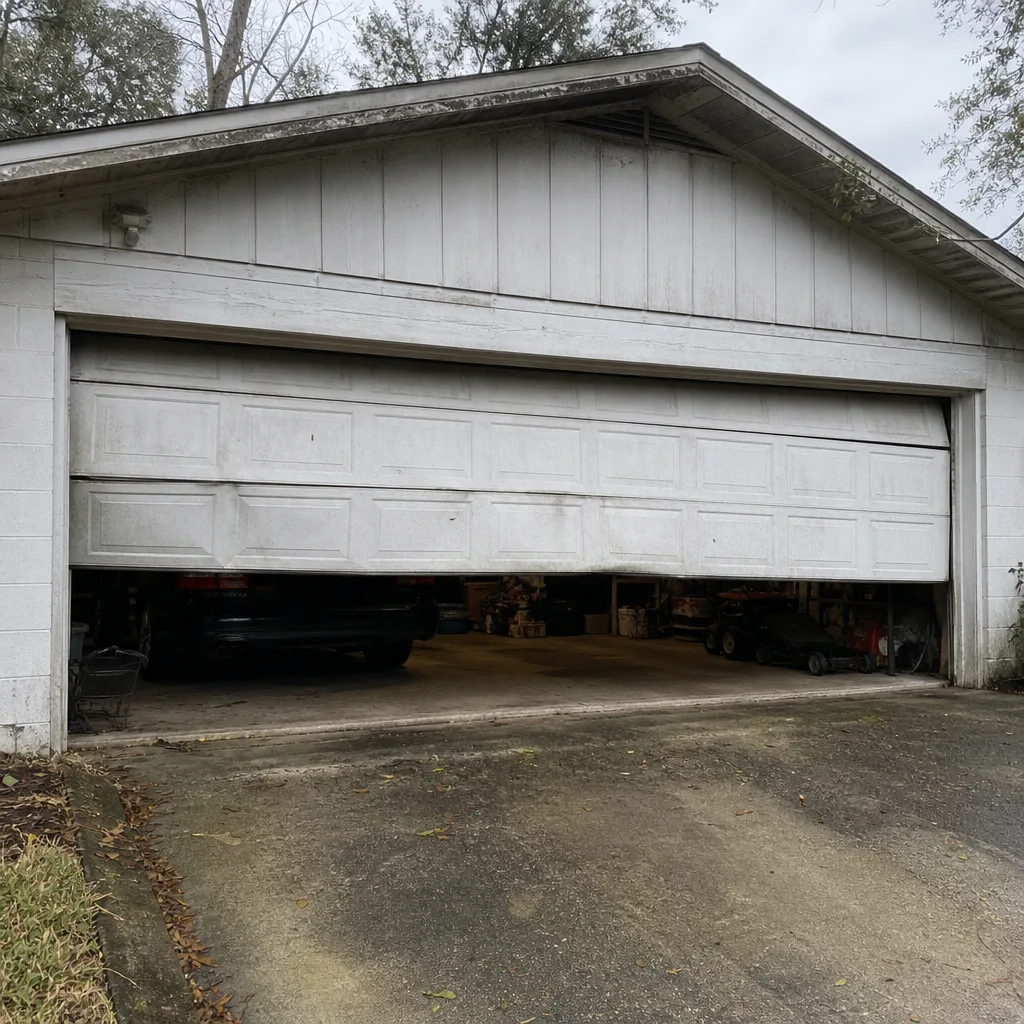
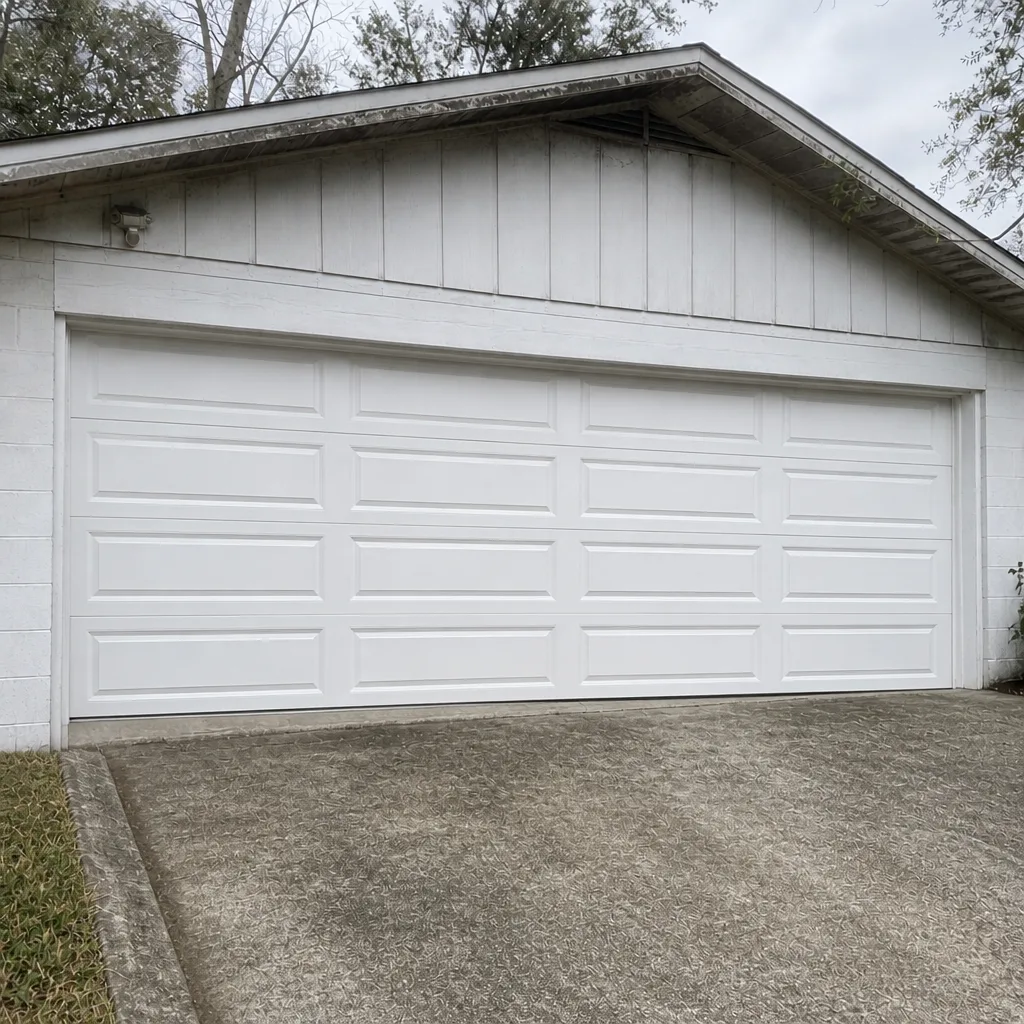
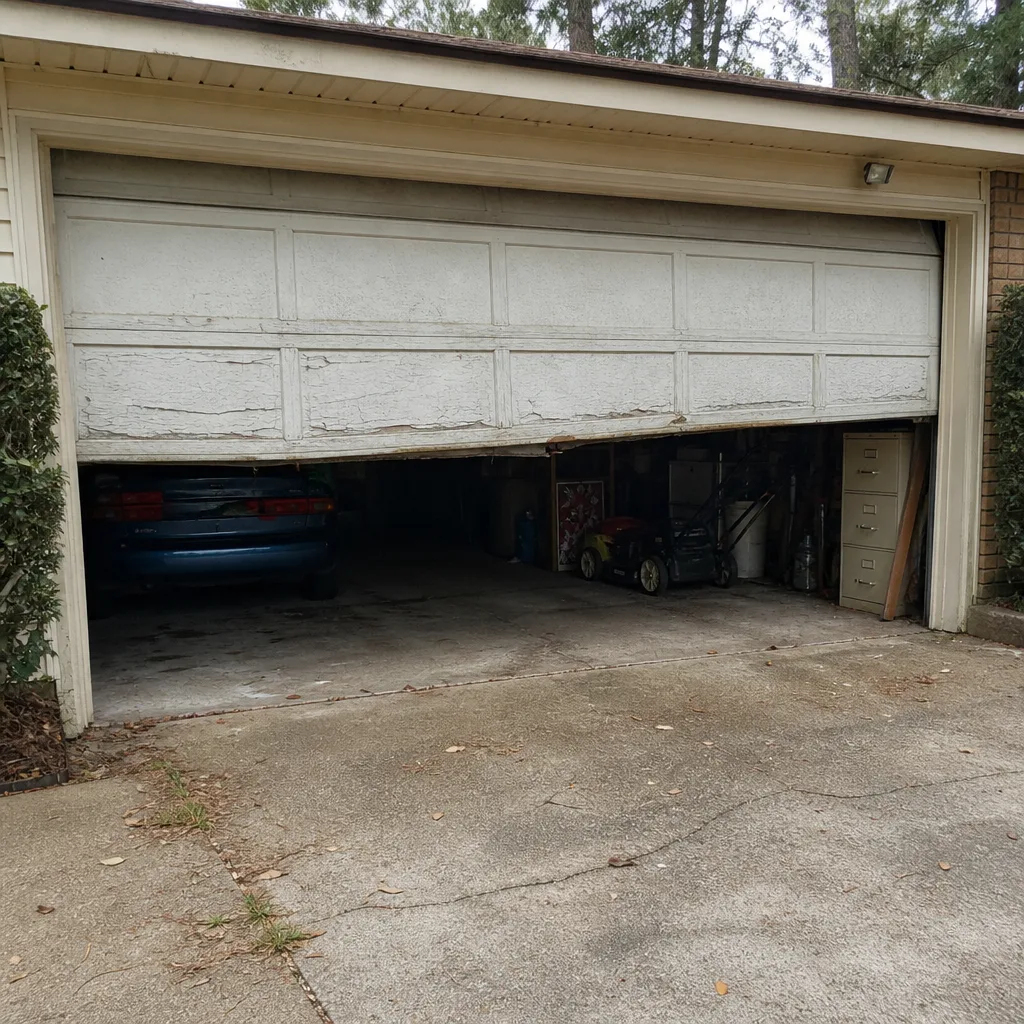
See the difference
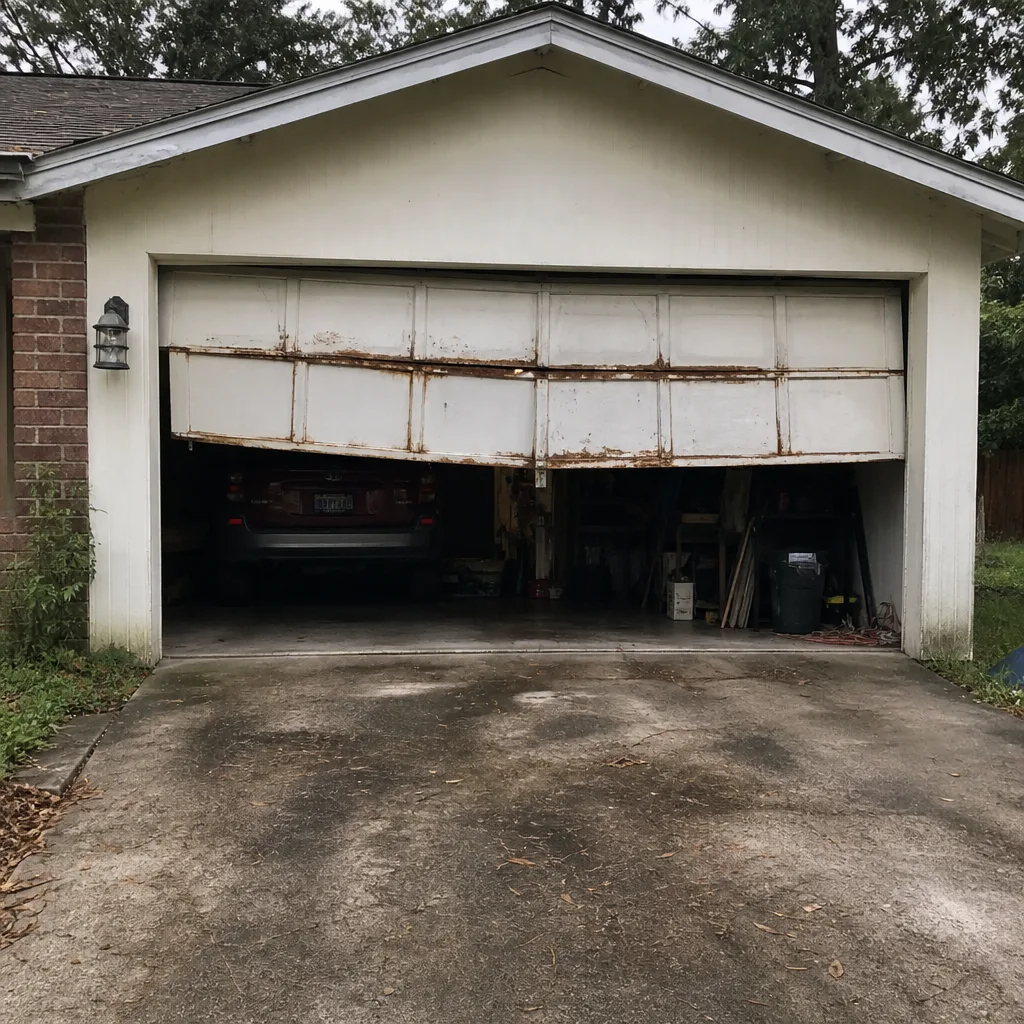 Before
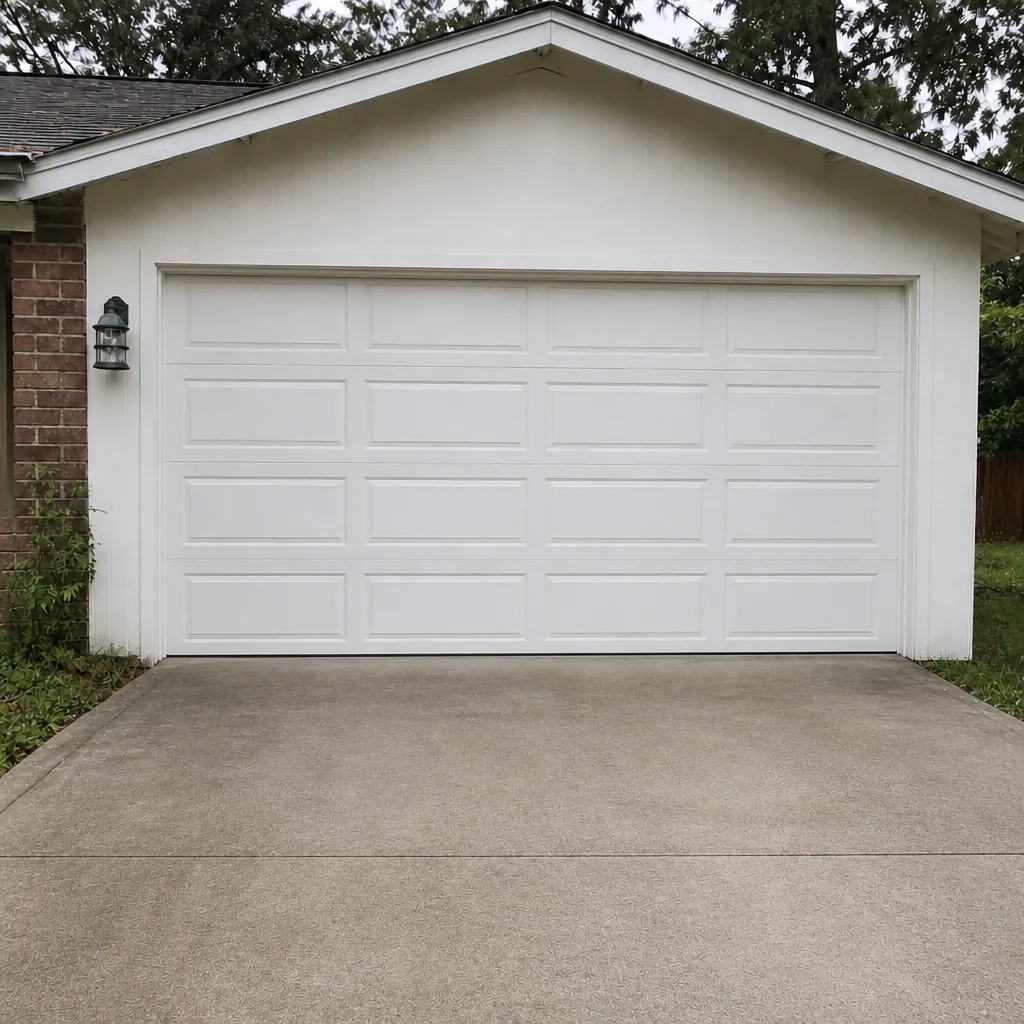 After
 Before
 After
 Before
 After
When to Call a Professional
Some jobs are safe to do yourself – visual checks, lubrication, cleaning tracks, and pressing wall controls. Others aren’t. Call a professional if you see rust pitting or uneven spacing on the spring coils, frayed or slack cables, a door that doesn’t hold position when you lift it by hand, a safety-reverse test that fails, or a door that has come off its tracks. Those are all safety issues, and they’re all trained-technician jobs. Call sooner if you hear a loud pop from the door, if it won’t close under load, or if a storm has bent a panel or pulled an anchor loose. Even outside business hours, we keep emergency garage door service in the lineup for exactly this kind of failure – a stuck open door, a door that won’t close, or a security problem with a door you can’t shut. Tallahassee Garage Door Repair Experts offers free estimates in Tallahassee; call (844) 443-3895 and we’ll get you scheduled or out to you for a time-sensitive problem.
Frequently Asked Questions
Once a year is the baseline for a typical door, with spot checks during the spring pollen season and before the rainy season. Use white lithium grease or a garage-door-specific spray on hinges, roller stems, and bearing plates, and a silicone or dry-film lubricant on the torsion spring. Keep the tracks dry and clean, and don’t lubricate nylon rollers. If the door gets heavy daily use, plan a second light pass mid-year. Call (844) 443-3895 for a tune-up if it’s been more than a year.
Moisture. The humidity here speeds up rust and pitting on the spring coils, and a corroded spring weakens unevenly and loses cycles. A spring rated for a long service life can fail well short of that rating when corrosion gets ahead of it. Monthly checks of the coils for rust spots, flaking paint, or gaps catch a spring early. Never adjust or replace one yourself – it’s a trained-technician job. Call (844) 443-3895 if you notice corrosion on the coils.
No. A torsion spring is under extreme tension, and the winding process is one of the most dangerous jobs in the trade. The tools and technique matter, and getting it wrong can cause serious injury or damage the door and opener. Spring repair is a dedicated service we handle with technicians trained for the risk. If a spring has snapped, keep the door closed and call (844) 443-3895 for same-day and emergency service.
A maintenance visit is scheduled: a tune-up covering lubrication, adjustment, spring and cable inspection, opener checks, and weatherstripping. A repair call fixes a specific fault – a broken spring, a door off its tracks, an opener that won’t close the door. If a maintenance visit uncovers a problem, we quote the fix and you approve everything before work starts. Call (844) 443-3895 to book either.
No. The written estimate sets the final price, and we quote and agree the cost before any work begins. What can change is the plan – if a maintenance check finds a spring that’s nearly done, we tell you and quote replacement separately, and the price you see on the estimate is the price you pay. Estimates are free, so call (844) 443-3895 to get an exact number for your door.
The local professional who performs the work is licensed and insured as their state requires. Our technicians have up to 9 years of experience, and they’re familiar with the major brands – LiftMaster, Chamberlain, Genie, Clopay, Amarr, Wayne Dalton, Craftsman, and Raynor – so the diagnosis fits your actual equipment rather than a generic guide. Call (844) 443-3895 for a free estimate.
The Bottom Line
Garage door maintenance in Tallahassee comes down to three habits: a monthly walk-around that checks the spring coils for corrosion, quarterly lubrication and weatherstripping inspections timed to our pollen and rainy seasons, and an annual professional service that handles the parts you shouldn’t touch. Skip the tracks with grease, treat a rusting spring as urgent, and don’t ignore an opener that misbehaves in the heat. The payoff is a door that keeps working through the humid months and storm season, and a repair bill that stays small. If you’d rather hand it off, tallahassee garage door repair experts can take it from here.
Ready to get your door on a schedule? Call (844) 443-3895 for a free estimate on a tune-up, spring repair, opener service, or a full new door. One call handles the whole job, and you’ll know the price before work starts.
Written by the team at Tallahassee Garage Door Repair Experts.