Last updated November 21, 2026
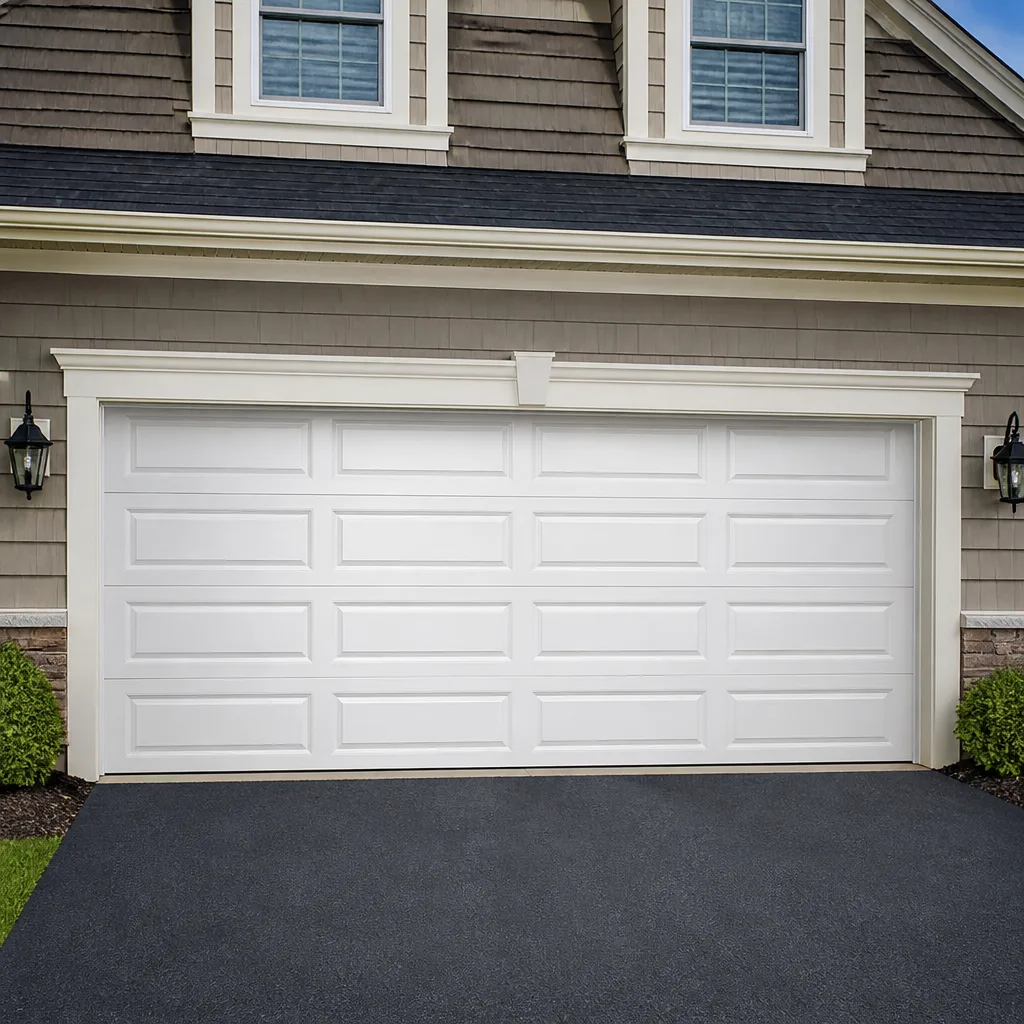 Raised-panel steel
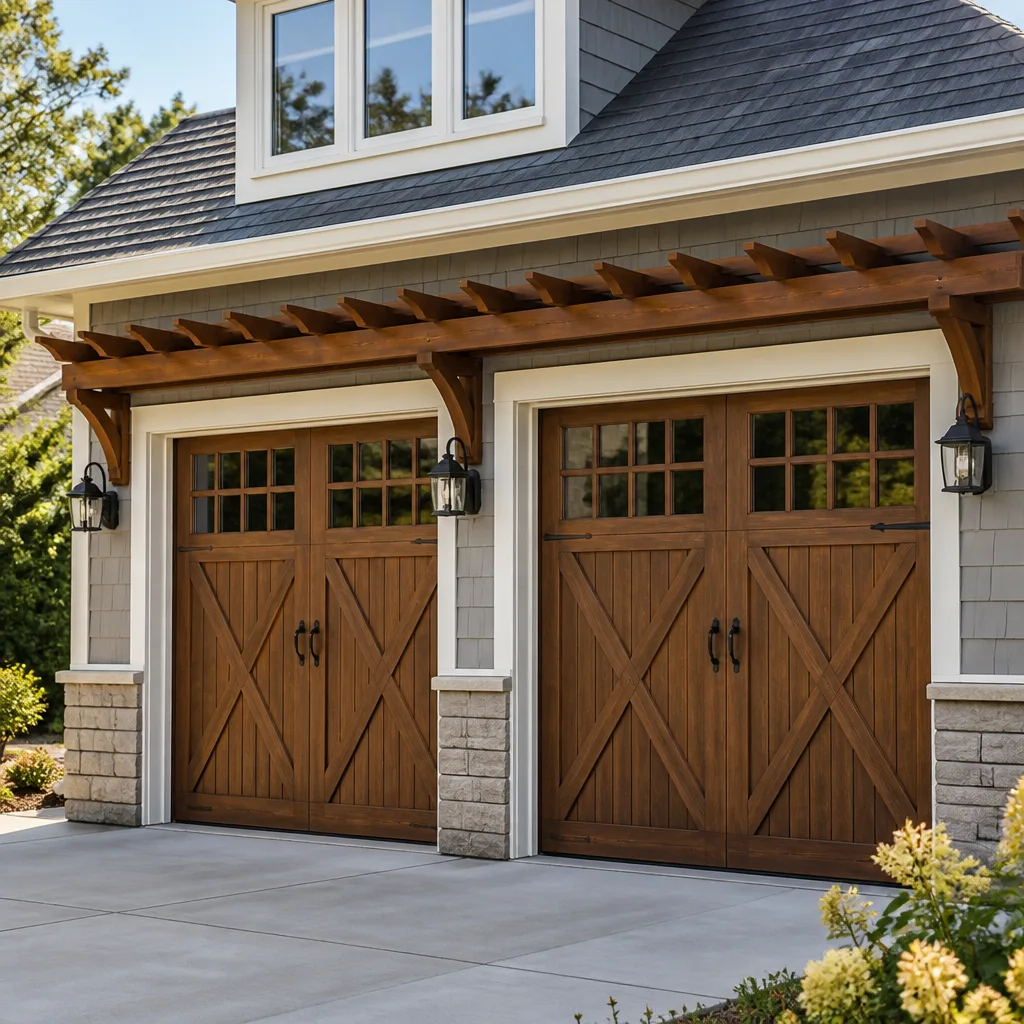 Carriage house
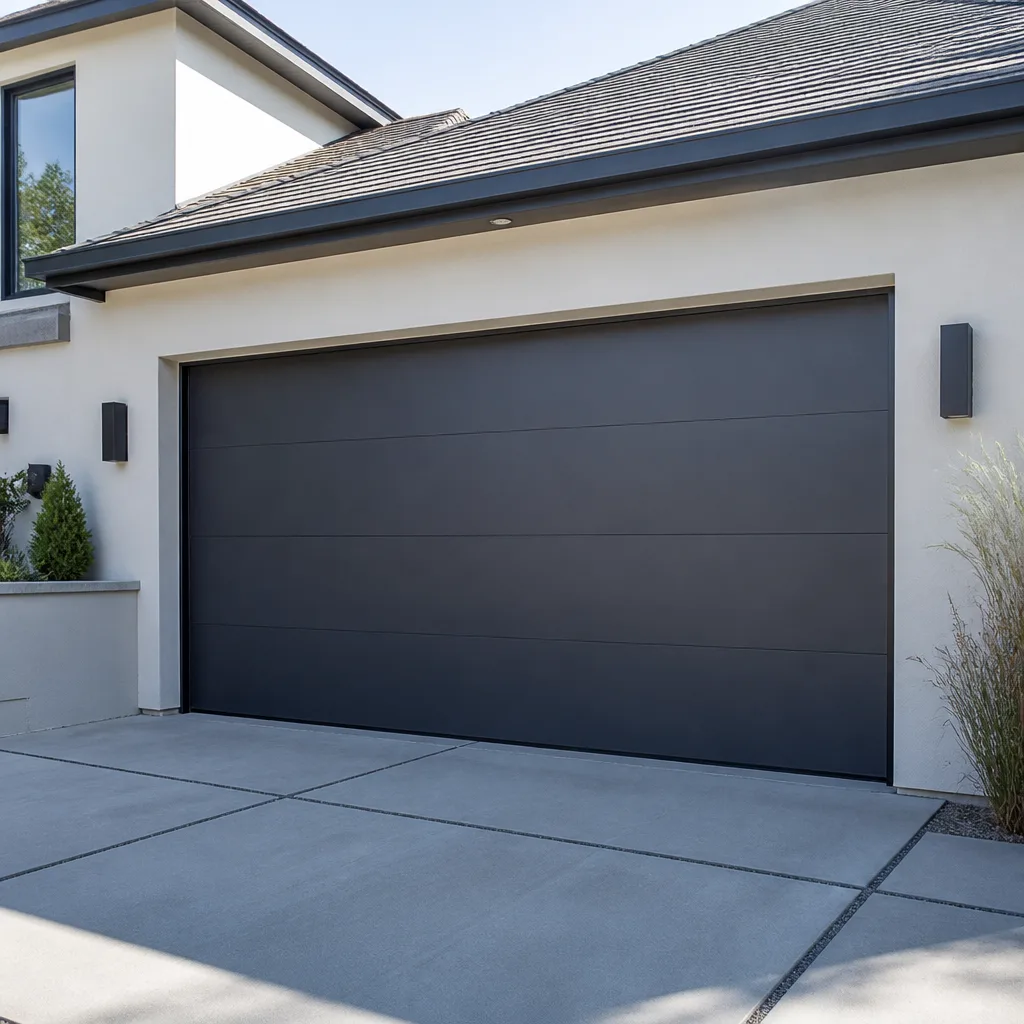 Modern flush
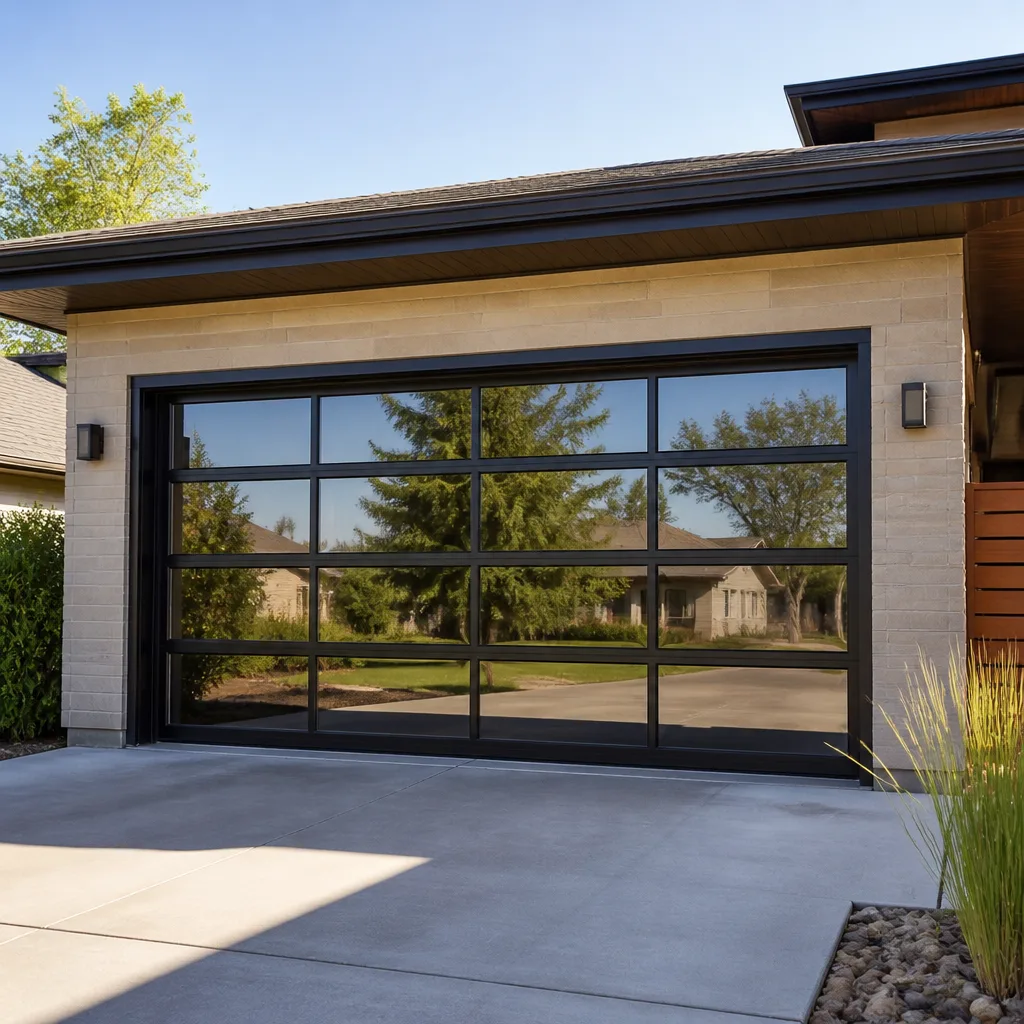 Full-view glass
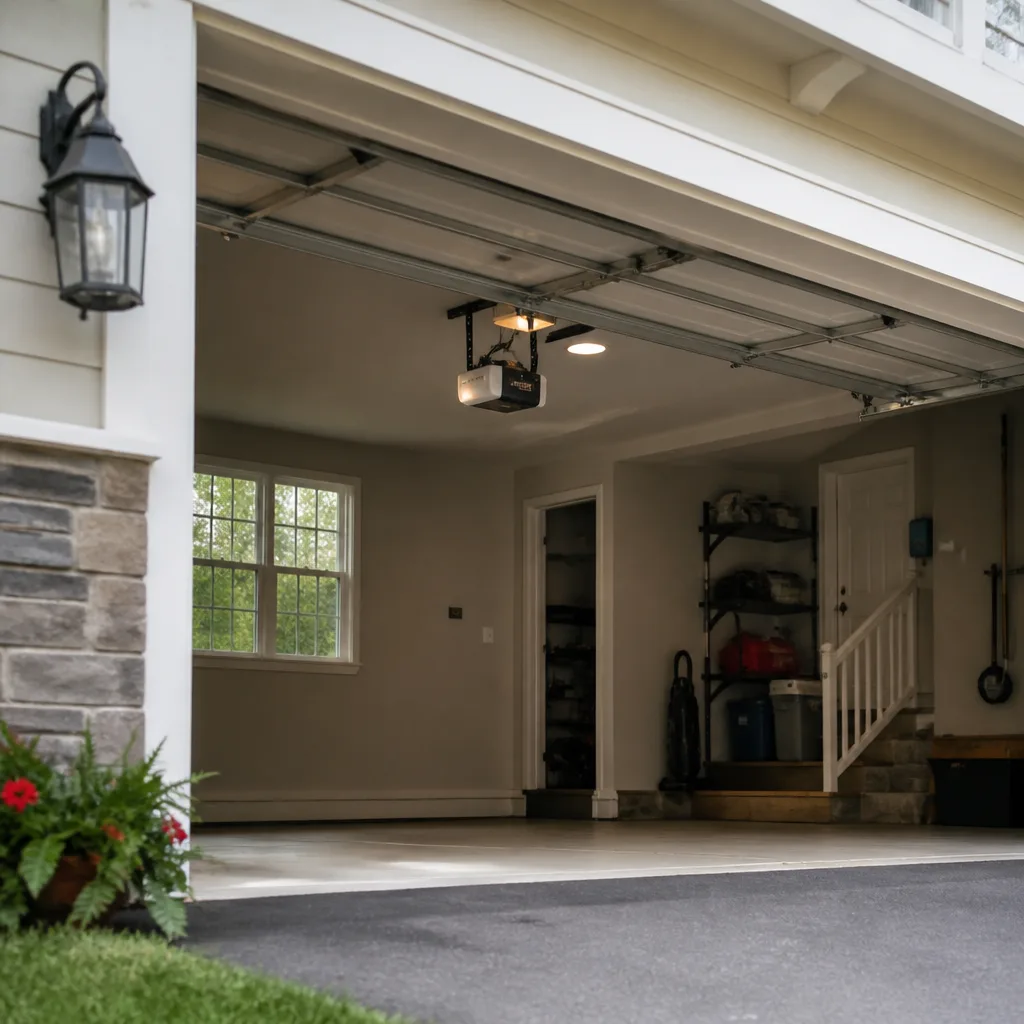 LiftMaster openers
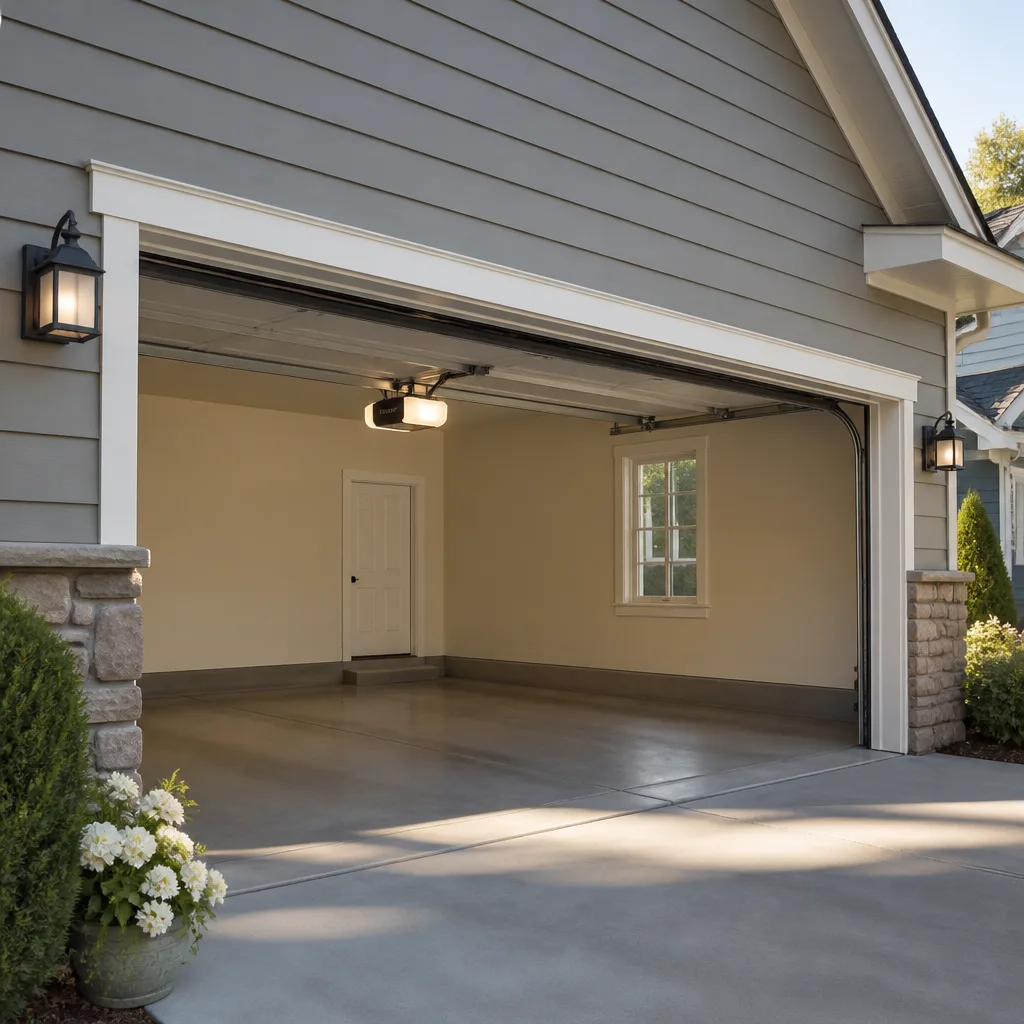 Chamberlain openers
Full 25-point door and opener safety check with every visit - springs, cables, rollers, tracks, and your LiftMaster or Chamberlain opener included
You get a price before we start. It does not change when the pro arrives.
Get your free estimateHow to Hire a Garage Door Contractor in Tallahassee: A Step-by-Step Guide
Florida does not require a specialty contractor license to install a residential garage door. That single fact is the reason this guide exists. It means the person quoting you a few hundred dollars less than everyone else may have learned the trade on your driveway, and the person with the nicest website may be subbing your job out to whoever is free that week. Tallahassee’s market is a mix of licensed specialists, unlicensed handymen, and big-box installers whose crews change with the season. The pricing overlaps more than you’d expect, so price alone tells you almost nothing about who’s actually doing the work. What follows gives you a vetting framework you can run in an afternoon.
Quick Answer
To hire a garage door contractor in Tallahassee, verify their Florida license through DBPR, confirm they carry general liability insurance, ask whether their technicians perform spring work themselves, and compare at least three written estimates line by line rather than on the bottom number. The contractor you want will name the brands they work on, explain the parts they’re quoting, and put the price in writing before anything gets touched. If any of those four things stalls, keep looking.
Styles & brands we work with
- Raised-panel steel
- Carriage house
- Modern flush
- Full-view glass
- LiftMaster openers
- Chamberlain openers
Table of Contents
- Which Florida License Categories Apply to Garage Door Work?
- How Do You Verify a Contractor in 60 Seconds?
- The Five Questions That Separate Specialists From Generalists
- Red Flags Specific to Tallahassee’s Market
- How to Read a Garage Door Estimate Line by Line
- What a Legitimate Warranty Actually Covers
- Why Tallahassee Conditions Affect Your Door’s Life
- When to Call a Professional
Which Florida License Categories Apply to Garage Door Work?
This is the part most homeowners skip, and it’s the part that matters most. Florida’s Department of Business and Professional Regulation does not issue a dedicated garage door contractor license. There is no “garage door specialty” credential you can look up, no single line item on a state database that confirms someone is qualified to work on torsion springs and openers. What exists instead are general license categories that sometimes cover the work and sometimes don’t, and a lot of room for someone to operate without any license at all.
So who shows up when you call for garage door work in Tallahassee?
- Licensed general or building contractors whose scope includes residential improvements. They’re insured and accountable to the state, though garage doors may be a small slice of what they do.
- Garage door specialists who may carry a general contractor license or operate under a business that does. Their real credential is the volume of doors they’ve worked on.
- Unlicensed handymen who can legally do small repairs under Florida’s handyman threshold but cross into unlicensed contracting when the job is larger. Garage door installation often lands on the wrong side of that line.
- Big-box installer programs that sell you a door and dispatch a subcontractor. The sub may be excellent, but you didn’t hire them and you have no relationship with them.
What does this mean practically? You can’t assume a license guarantees a good garage door tech, and you can’t assume the absence of one means the person is unqualified. You have to ask directly and read the answer. Any contractor doing work over Florida’s handyman dollar threshold should be able to name their license type and number without flinching. If they can’t, that’s your answer. Our own approach is to tell you plainly what we do – garage door repair, opener repair, spring work, installation, and emergency service – and let you decide if that’s the right fit. No pretending to be something we’re not.
How Do You Verify a Contractor in 60 Seconds?
You can confirm the basics faster than it takes to make coffee. Florida makes the records public, and the process is the same whether you’re in Killearn, Southwood, or anywhere else in Leon County. Run these steps before you let anyone touch your door.
- Search the DBPR license database. Go to the Florida DBPR license lookup, enter the contractor’s name or license number, and check the status. It should say “Current” or “Active,” not “Delinquent,” “Null and Void,” or “Suspended.”
- Confirm the license type matches the work. A license that doesn’t cover residential garage door installation is a red flag, even if it’s in good standing.
- Check for complaints and disciplinary history. The same DBPR record will show formal complaints. One old complaint isn’t disqualifying. A pattern of them is.
- Ask for a certificate of insurance. General liability coverage should be current, and the certificate should name the business you’re hiring. Call the insurer if something looks off.
- Verify the business name and address match. A quote on a plain invoice with no business name, no address, and no license number isn’t a quote. It’s a handshake.
- Google the phone number. If it returns nothing but a recently created page, or ties back to a business in another state, you’ve learned what you needed to know.
Sixty seconds. That’s the whole process, and it filters out most of the problem contractors before they ever set foot on your property.
The Five Questions That Separate Specialists From Generalists
The right questions do more work than any review you’ll read. Ask these five on the phone before you schedule a visit. How someone answers when they’re not expecting the question tells you more than a polished pitch.
1. “Do you do spring work yourself, or do you sub it out?” Torsion spring replacement is one of the most dangerous jobs in the trade. A specialist will answer instantly because spring work is core to what they do. A generalist will get vague. Our spring repair is handled as its own service, not folded into a general repair call, and that’s the standard to hold anyone to.
2. “Which brands do you work on regularly?” You want to hear specific names – Clopay, Amarr, Wayne Dalton, LiftMaster, Chamberlain, Genie, Craftsman, Raynor – not “all of them.” A technician who knows a brand knows its failure points, its opener compatibility, and which parts are stocked versus special order. Our technicians work on those eight brands, and our technicians have up to 9 years of experience. The answer here tells you whether you’re talking to someone who reads spec sheets or someone who guesses.
3. “What’s your process if you open the door and find something else wrong?” A good technician stops, shows you the problem, and re-quotes before continuing. A bad one finishes the job and surprises you at payment. One call should be a full fix, but “full fix” means you approve the scope, not that you sign a blank check.
4. “What does your warranty cover, and what voids it?” Parts warranties come from the manufacturer and are usually straightforward. Labor warranties vary wildly. Ask for the specific terms in writing, and ask what would void it.
5. “Do you have a physical business address in Florida?” Not a PO box, not a hotel, not “we serve your area.” A real business address you could drive to. If they won’t give you one, they probably aren’t licensed to do the work you’re asking for.
Red Flags Specific to Tallahassee’s Market
Tallahassee has a few problems that don’t show up in every market. Knowing them saves you a bad hire.
- Storm-chaser crews that arrive after a hurricane. When a named storm passes through, out-of-state crews with magnetic signs and out-of-state plates flood the area. They’re gone in a few weeks, their warranty means nothing, and their workmanship isn’t accountable to anyone local. Ask where the business is registered and check the DBPR record before you let them quote. An established local address in Leon County is a meaningful signal.
- Cash-only quotes. A legitimate garage door job gets a written estimate and a payment method that leaves a paper trail. Cash-only is a way to avoid records, taxes, and liability. There’s no upside for you.
- No local address at all. “We serve Tallahassee” means nothing if the mailing address is out of state. Ask.
- Door-knocking after a storm. Legitimate garage door companies don’t typically canvas neighborhoods cold. If someone shows up unsolicited with a “good deal” because they’re “in the area,” the deal is the warning.
- Pressure to sign today. Door installers order parts. There is no legitimate reason your quote expires in three hours. A specialist will let you think about it.
- Vague pricing on spring work. If the quote doesn’t state whether it’s for one spring or a matched pair, you’re about to be confused at payment. Spring prices are per spring, and a pair costs roughly twice one spring. Any quote that blurs that distinction is a quote designed to blur it.
None of these are rare. We’ve watched all of them show up in Tallahassee’s market, and homeowners who ask the five questions above catch most of them before signing.
How to Read a Garage Door Estimate Line by Line
Three bids with three different bottom numbers are useless unless you can see what’s inside them. The trick is comparing line items, not totals. Here’s the framework.
A real garage door estimate separates materials, labor, and any additional charges. It should name the door model or the spring size, the opener model if one is included, and the disposal fee if the old door is being hauled away.
- Door or panel cost. Should name the brand and model, e.g. a specific Clopay or Amarr model number. If it says “standard residential door,” you can’t compare it to anything.
- Hardware and tracks. Springs, hinges, rollers, cables, and track should be itemized or bundled transparently. Ask whether the doors come with a matched spring pair.
- Labor. One line is fine, but it should reflect the actual scope. Removing an old door and installing a new one is a different labor load than swapping a spring.
- Opener (if included). Name the brand and model. LiftMaster and Chamberlain units with myQ connectivity are common, and the model determines whether you get smart-home features or not.
- Disposal and permits. Old door haul-away should be either included or stated as a separate fee. Permit requirements vary – ask your city’s building department directly if the contractor is unsure.
- Warranty terms. Parts and labor warranties should be spelled out, not referenced vaguely as “full warranty.”
Now the specific thing to watch for on spring quotes: a per-spring price is for one spring. A matched pair is usually replaced together, and that’s roughly double. If one estimate shows a single number and another shows a pair, they aren’t comparable prices – one is just fewer springs. Ask explicitly which is which.
Our own written estimate states what’s included, what’s not, and the price agreed before work starts. That last part should be a hard rule with whoever you hire. The written quote is the price.
What a Legitimate Warranty Actually Covers
Warranty language is where most homeowners get caught, because a warranty you didn’t read is a warranty you probably don’t have. Here’s what to check.
Parts warranties come from the manufacturer, and they’re usually the reliable part. A torsion spring typically carries a limited cycle-life warranty from the spring maker, not the installer. Door manufacturers like Clopay, Amarr, and Wayne Dalton publish specific warranty terms by model. Get the manufacturer’s document, not a summary from the contractor.
Labor warranties are entirely up to the contractor. A good one will give you a specific period in writing. Ask what it covers – a return visit at no charge if the door doesn’t operate right, versus a “call us and we’ll talk” warranty, are very different things.
What voids most installer warranties:
- Homeowner adjustment or tampering. If you try to tighten a cable or adjust a spring yourself and something fails, the labor warranty usually won’t cover it. Leave the adjustments to the tech.
- Improper door maintenance. Almost every door manufacturer requires basic upkeep – lubrication, visual inspection for worn rollers and hinges. Skip it for years and the warranty claim gets harder.
- Unauthorized repairs by a third party. If you have someone else service the door, the original warranty on the labor is usually over.
- Door damage from impact. A car bumper or a fallen limb isn’t a warranty item.
- Installing an opener incompatible with the door. Some opener and door weight combinations aren’t rated for each other. Make sure the installer is matching the equipment properly.
Ask for the warranty in writing, read it back to the contractor, and confirm the specific periods for parts and labor. The answer should be specific, not general.
Why Tallahassee Conditions Affect Your Door’s Life
Winters here are mild, and that actually changes what to look for in a contractor. In colder climates, garage doors get hammered by temperature swings and heavy snow load, and installers build their reputations around that. In Tallahassee, the pressure points are different. The heat and humidity are what age a door here. Steel panels fade, paint chalks, wood sections swell, and rollers and hinges dry out faster than someone from a northern climate would expect. A contractor who mostly works Tallahassee jobs knows this and will recommend maintenance intervals and door materials that fit the conditions, not the climate they trained in.
What does this mean for hiring? A contractor who quotes you a wood door with the maintenance schedule of a Minnesota garage is going to disappoint you. Ask how they handle doors in summer humidity. Ask whether they see rust on steel sections and what they recommend. The answer reveals whether they’re working from experience here or from a generic script.
One related market quirk: Tallahassee’s older neighborhoods have plenty of homes with original or near-original garage doors, and replacement work on those properties often surfaces framing and header issues the original installer covered up. A contractor who expects that and quotes for it is a contractor who’s done the work here. One who installs to a fixed spec without looking is going to find the problem on your time.
When to Call a Professional
Some garage door problems are annoying. Some are dangerous. Knowing which is which protects you.
Call a professional for: a torsion spring that has snapped or is visibly separated, a door that’s hanging crooked off the track, a door that slams down or reverses only sometimes, cables that are frayed or loose, a door you can’t lift manually because it weighs too much, or an opener that runs but doesn’t move the door. The spring and cable cases are the urgent ones. Torsion springs are under enough tension to cause serious injury, and a door that’s off its track can drop unexpectedly. Don’t test it. Leave it closed and call.
Tallahassee Garage Door Repair Experts offers free estimates in Tallahassee – call (844) 443-3895. Our emergency garage door service is built in for situations that can’t wait, and our technicians have up to 9 years of experience with Clopay, Amarr, Wayne Dalton, and the other major brands. If you’d rather start with a normal appointment, that works too.
See the difference
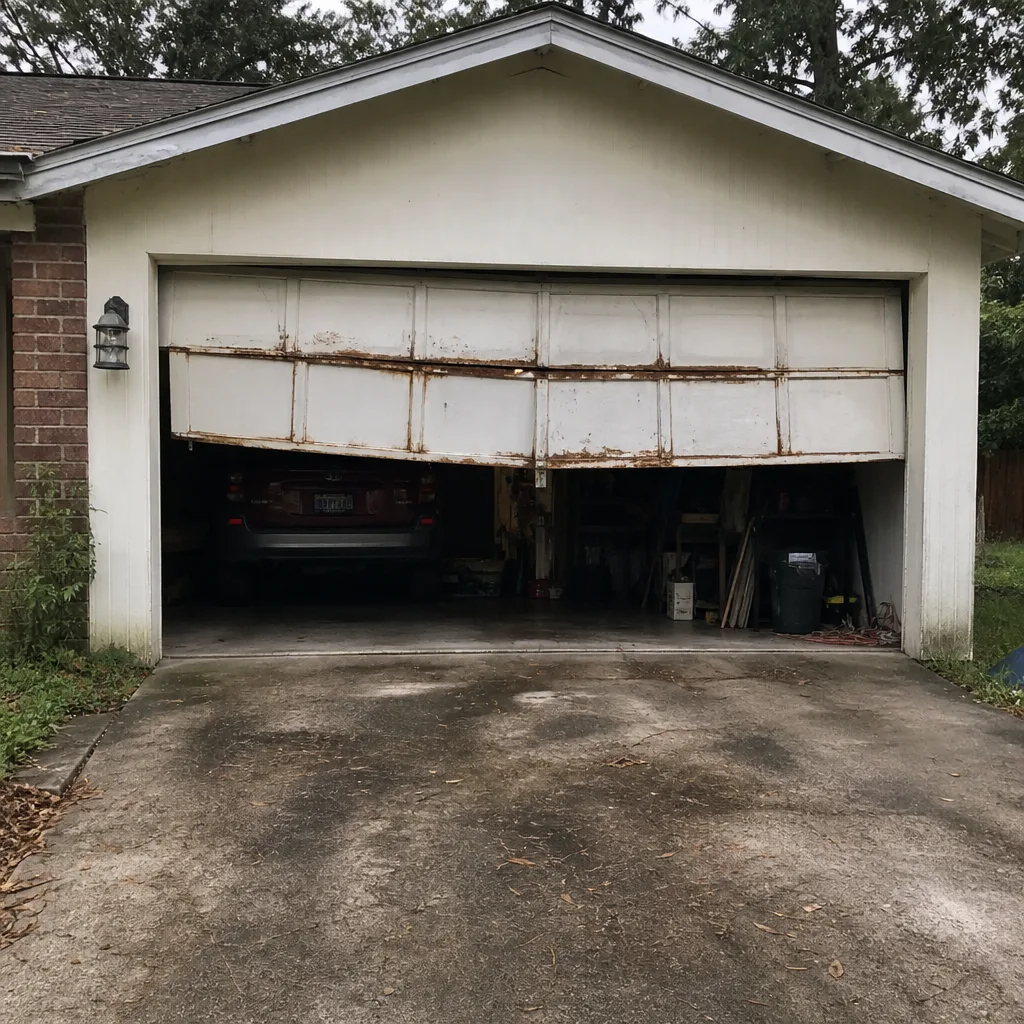 Before
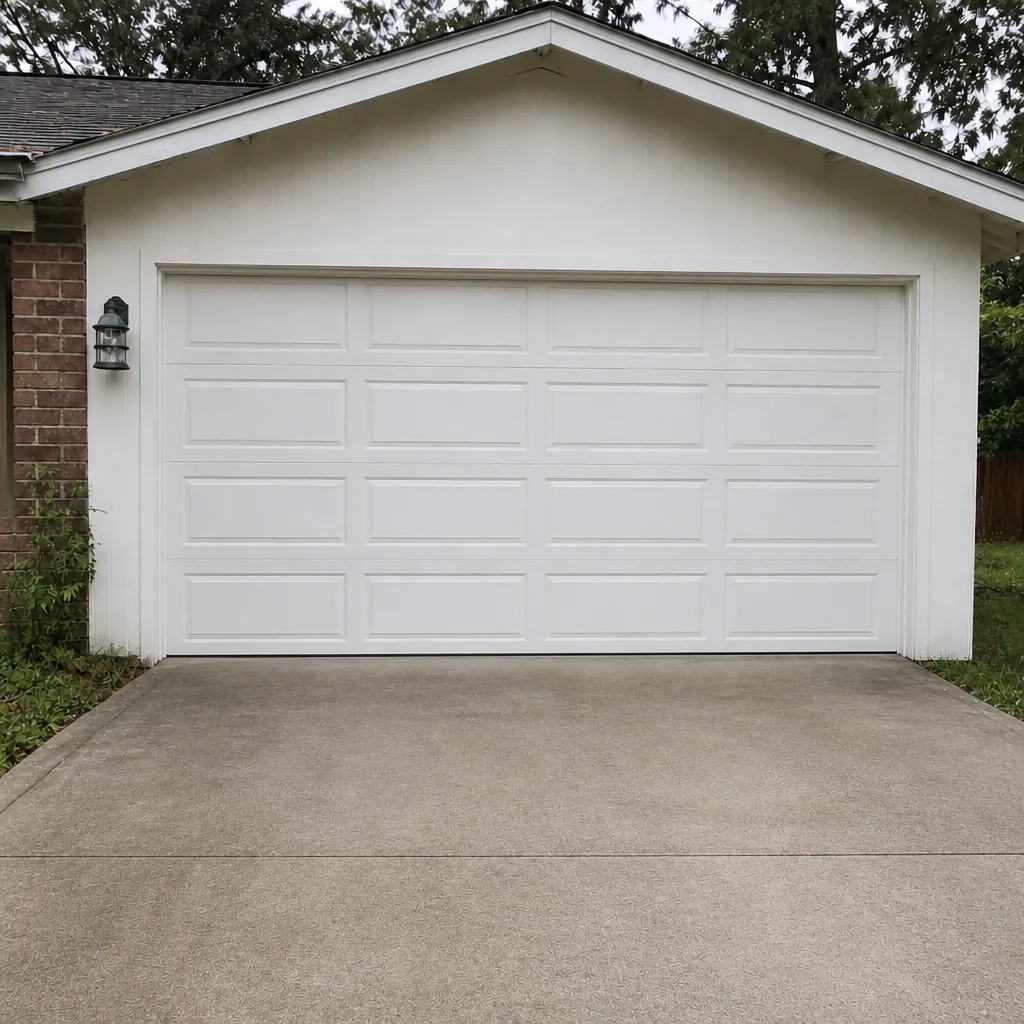 After
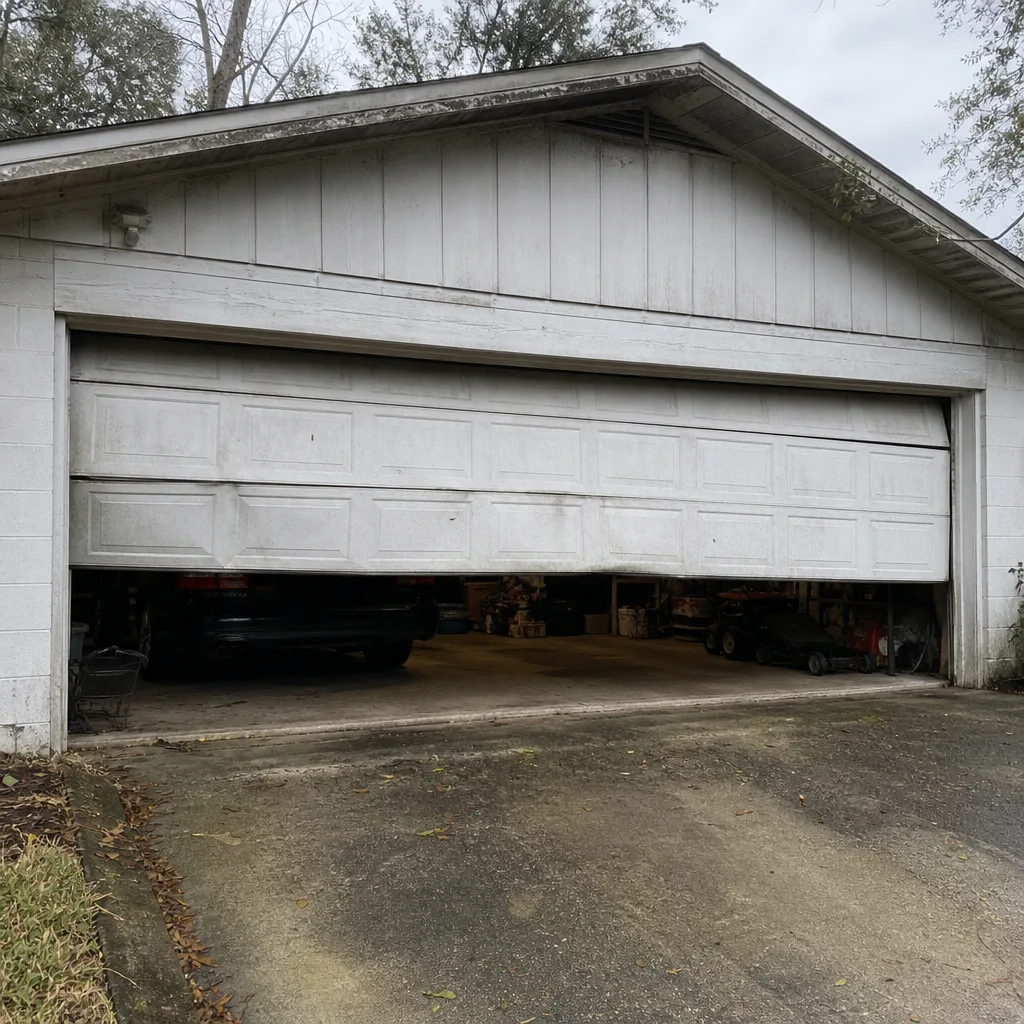 Before
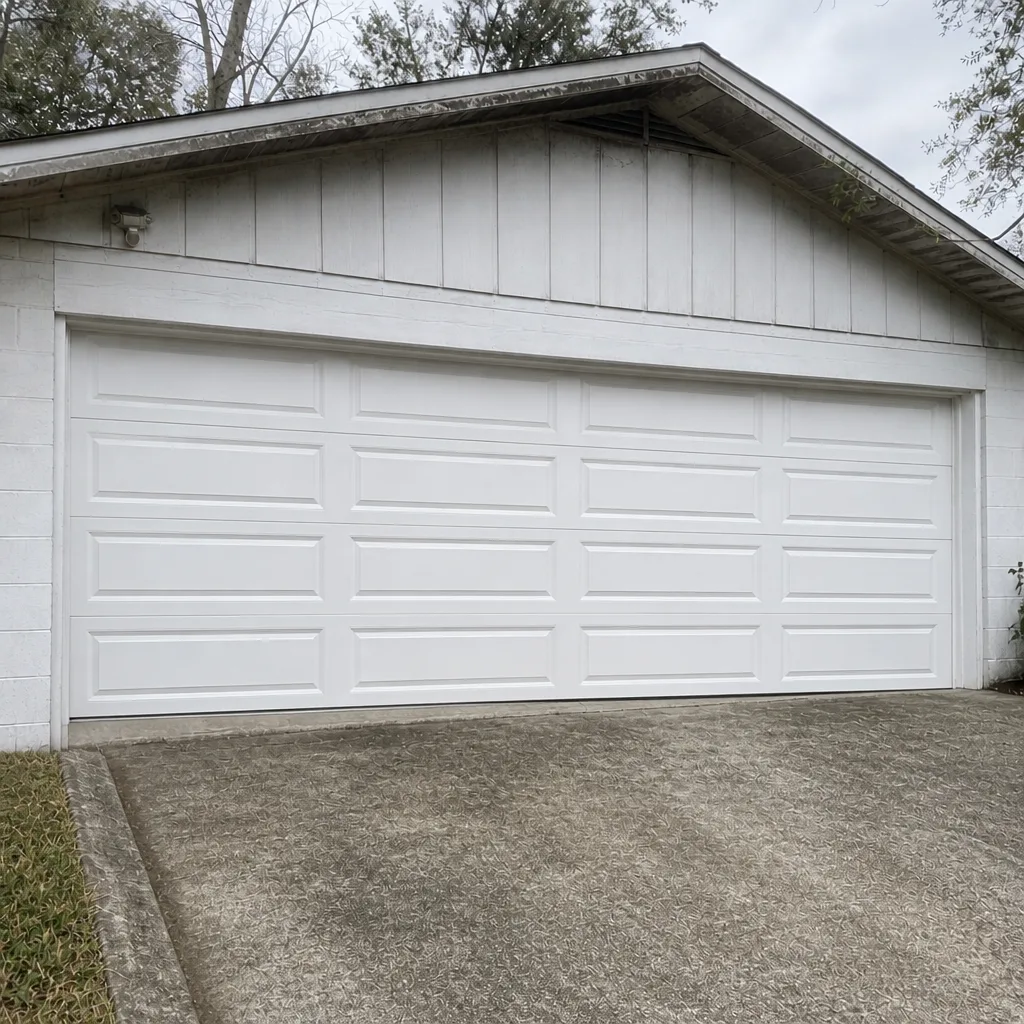 After
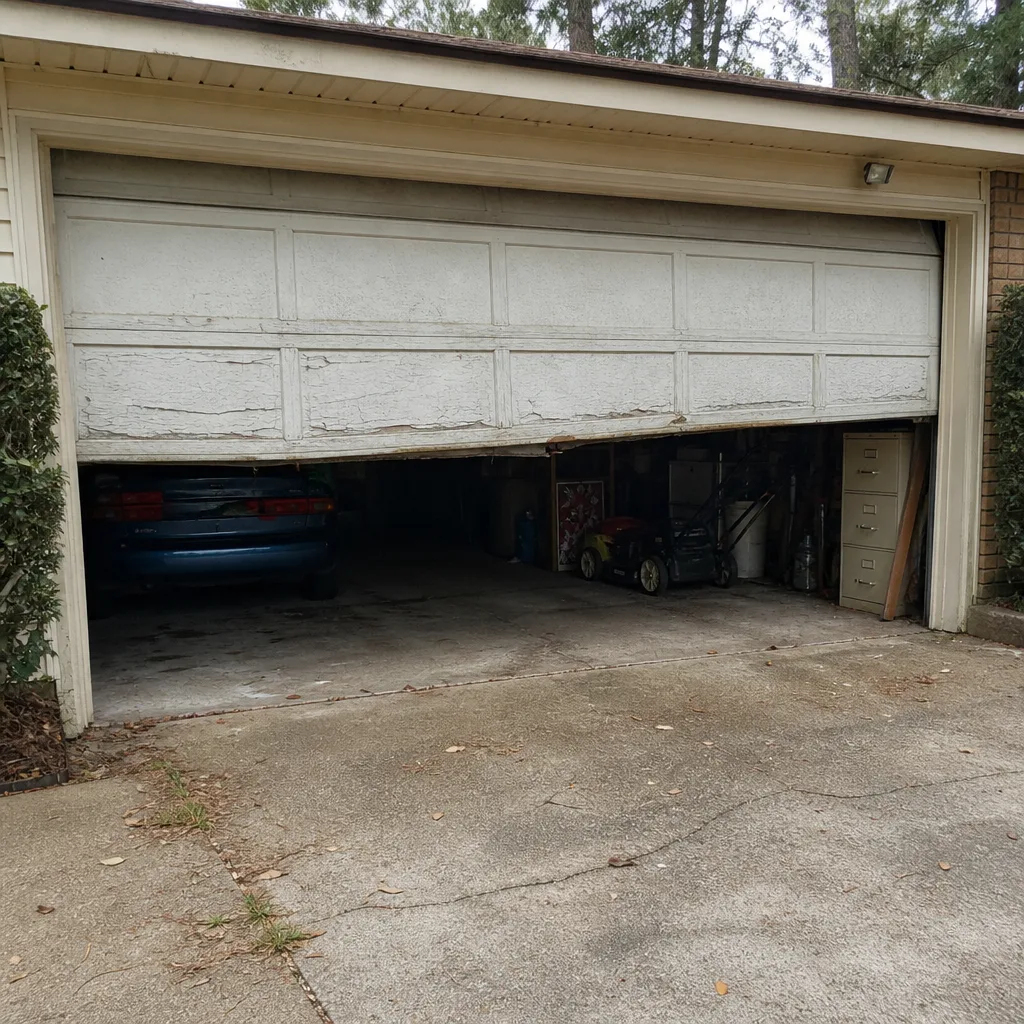 Before
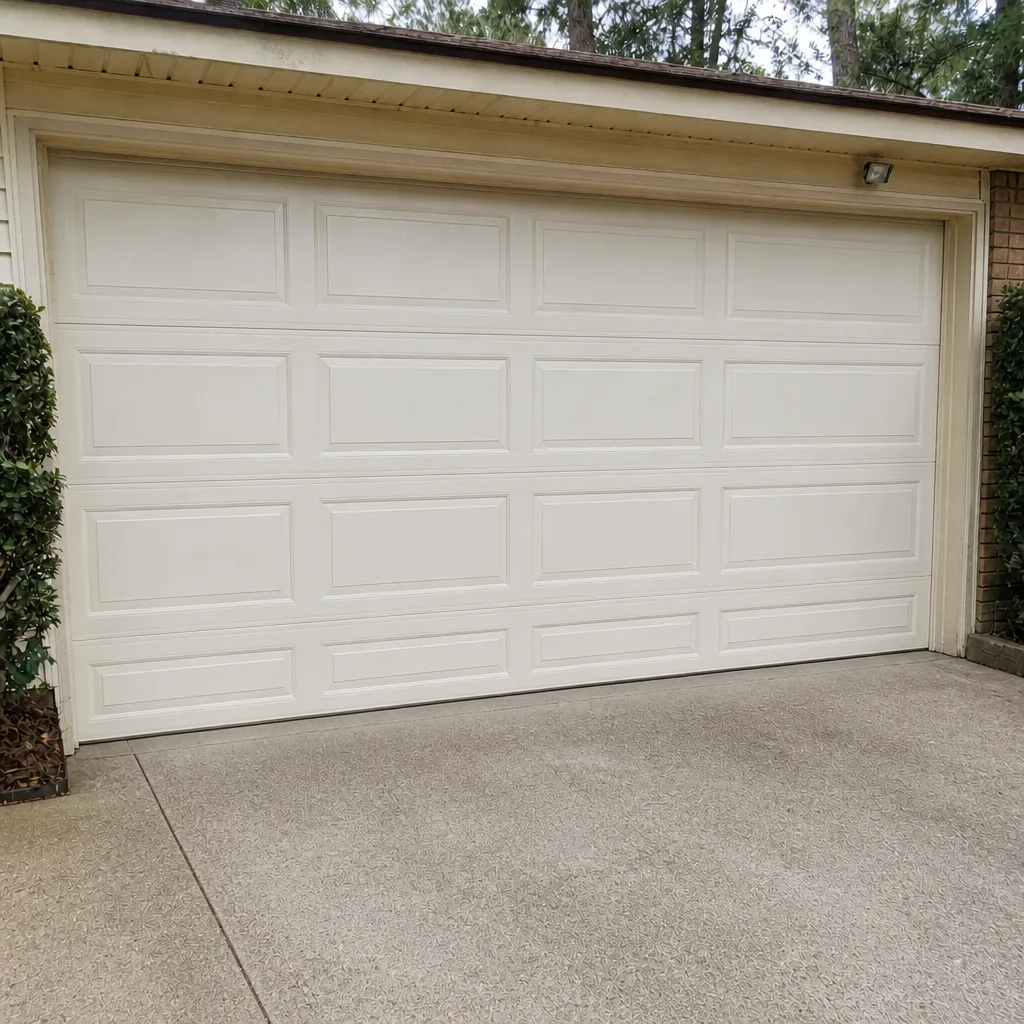 After
Common Mistakes to Avoid
- Hiring on price alone. In Tallahassee, a $200 difference between bids often reflects a difference in who’s doing the work, not a difference in quality. Compare line items, license status, and warranty terms before you compare totals.
- Skipping the insurance check. A contractor who’s not insured can leave you holding the medical bill if someone gets hurt on your property. Ask for the certificate.
- Letting a spring quote stay vague. Confirm whether the number covers one spring or a matched pair. A pair costs roughly twice one spring, and any quote that doesn’t say is a quote you’ll be arguing about later.
- Accepting a cash-only quote. Legitimate garage door work comes with a written estimate and traceable payment. Cash-only is a way to skip both.
- Ignoring storm-chaser timing. After a hurricane passes through Tallahassee, the phone book fills with names you’ve never seen. Verify the business address and license before you book. The ones with local skin in the game will still be here next season.
- Assuming a national retailer’s installer is a specialist. Big-box programs often subcontracted the work, and you have no relationship with the crew doing the install. Ask who shows up, and whether they’re the same people who’ll be back if something’s wrong.
- Skipping the warranty in writing. A warranty you didn’t read and didn’t get in writing is a warranty that probably won’t help you. The parts term comes from the manufacturer; the labor term comes from the contractor. Get both.
Frequently Asked Questions
Florida doesn’t require a specialty garage door license, but the contractor doing the work should hold a current general or building contractor license with DBPR if the job exceeds Florida’s handyman threshold. Ask for the license number and verify it online before scheduling. Unlicensed handymen can legally do small repairs, but they can’t do full installs. Call (844) 443-3895 if you want to check on a specific quote.
Typical garage door repair costs in Tallahassee range from about $150 to $450 depending on the issue. Spring replacement runs higher, and a matched pair of springs costs roughly twice a single spring. Opener repair generally falls in the middle of that range. Every estimate should be free and in writing, with the price agreed before work begins – call (844) 443-3895 for your estimate.
A contractor who can’t or won’t provide a license number, a business address, and an insurance certificate is the biggest red flag. In Tallahassee’s market, storm-chaser crews sometimes show up after a hurricane with out-of-state plates and no local registration. If any of the three basics stalls, walk away. Call (844) 443-3895 if you want to compare against a written estimate from us.
No. Torsion springs are under enough tension to cause serious injury, and the winding process requires specific tools and training. Spring repair is one of the most dangerous jobs in the trade. Leave it to a trained technician – call (844) 443-3895 for a same-day appointment on spring issues.
Compare line items, not totals. Check that each estimate names the door model or spring size, the opener brand and model if included, labor, disposal fees, and specific warranty terms for parts and labor. A pair-of-springs quote shouldn’t be compared against a single-spring quote. Call (844) 443-3895 if you want a written estimate you can line up against the others line by line.
Yes, same-day service is often possible for repair and emergency calls in Tallahassee. Our emergency garage door service is built into our core offerings, so urgent calls get priority. New door installations are scheduled after a free measure and written estimate, since doors and openers are ordered in. Call (844) 443-3895 to check availability today.
The Bottom Line
Hiring a garage door contractor in Tallahassee comes down to a short verification checklist: license, insurance, five questions, three line-item estimates, and warranty terms in writing. The market’s pricing overlaps too much for price alone to guide you, and the absence of a specialty license means the vetting work has to happen on your side. Do the 60-second DBPR check. Ask the five questions. Read the estimates properly, especially on springs. If all four pass, you’re likely dealing with someone who knows their trade. If something stalls, keep looking. Tallahassee Garage Door Repair Experts provides garage door repair, opener repair, spring work, installation, and emergency service for Clopay, Amarr, Wayne Dalton, and the other major brands – call (844) 443-3895 for a free estimate and an answer you can compare against the rest.
Written by the team at Tallahassee Garage Door Repair Experts.