Last updated November 21, 2026
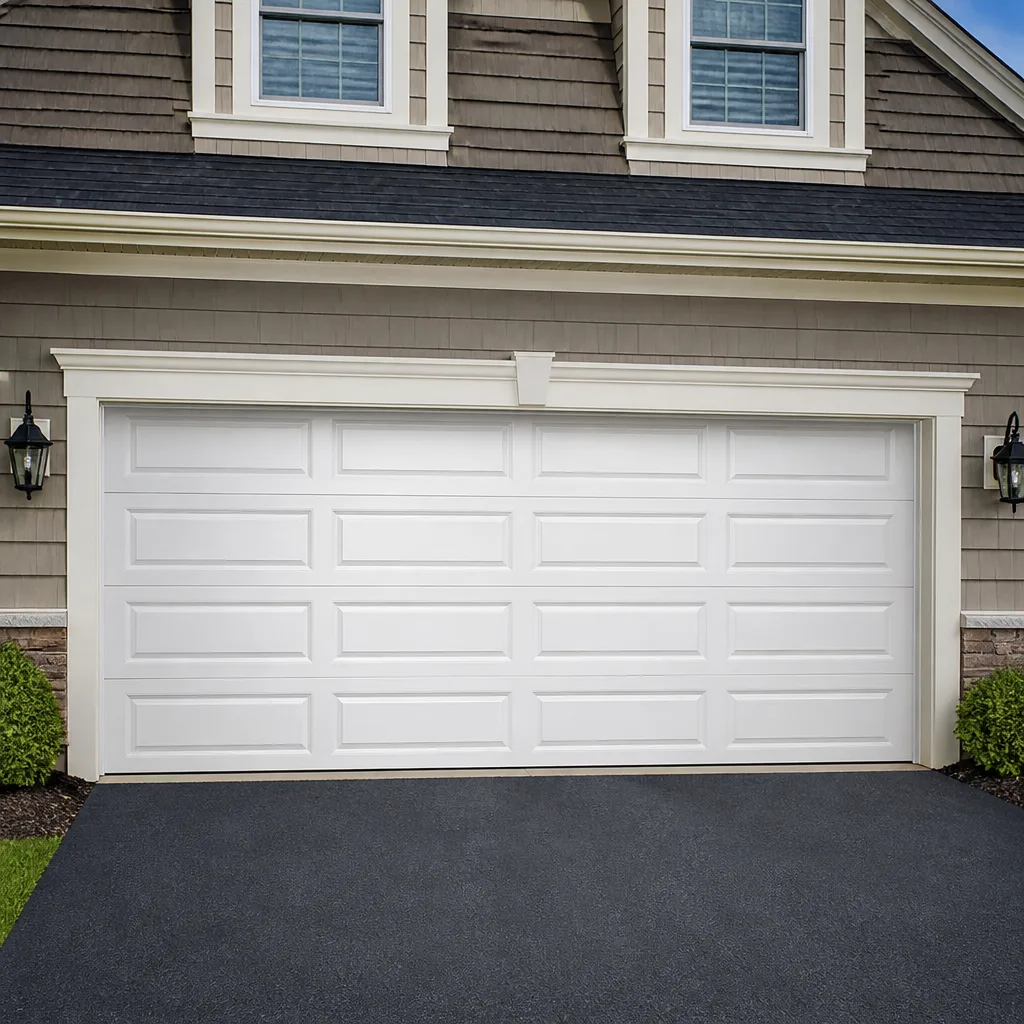 Raised-panel steel
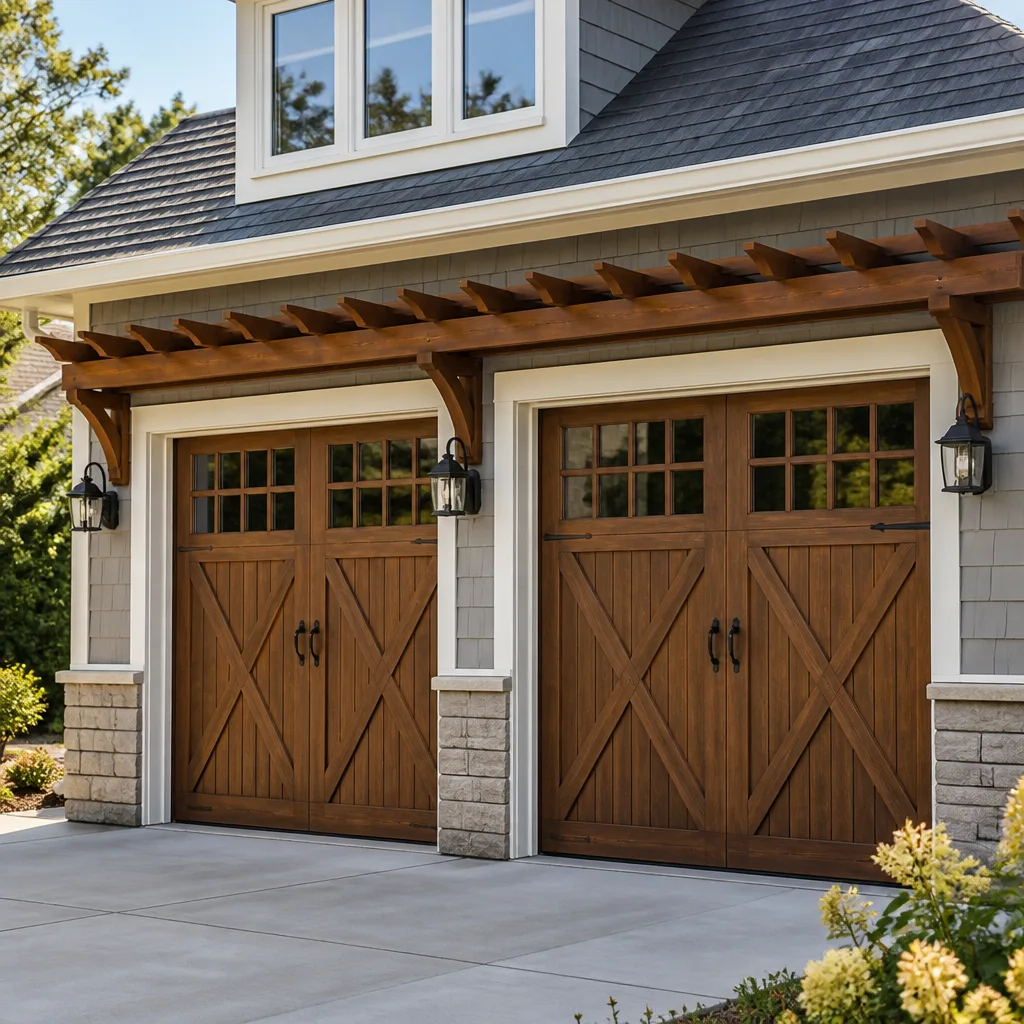 Carriage house
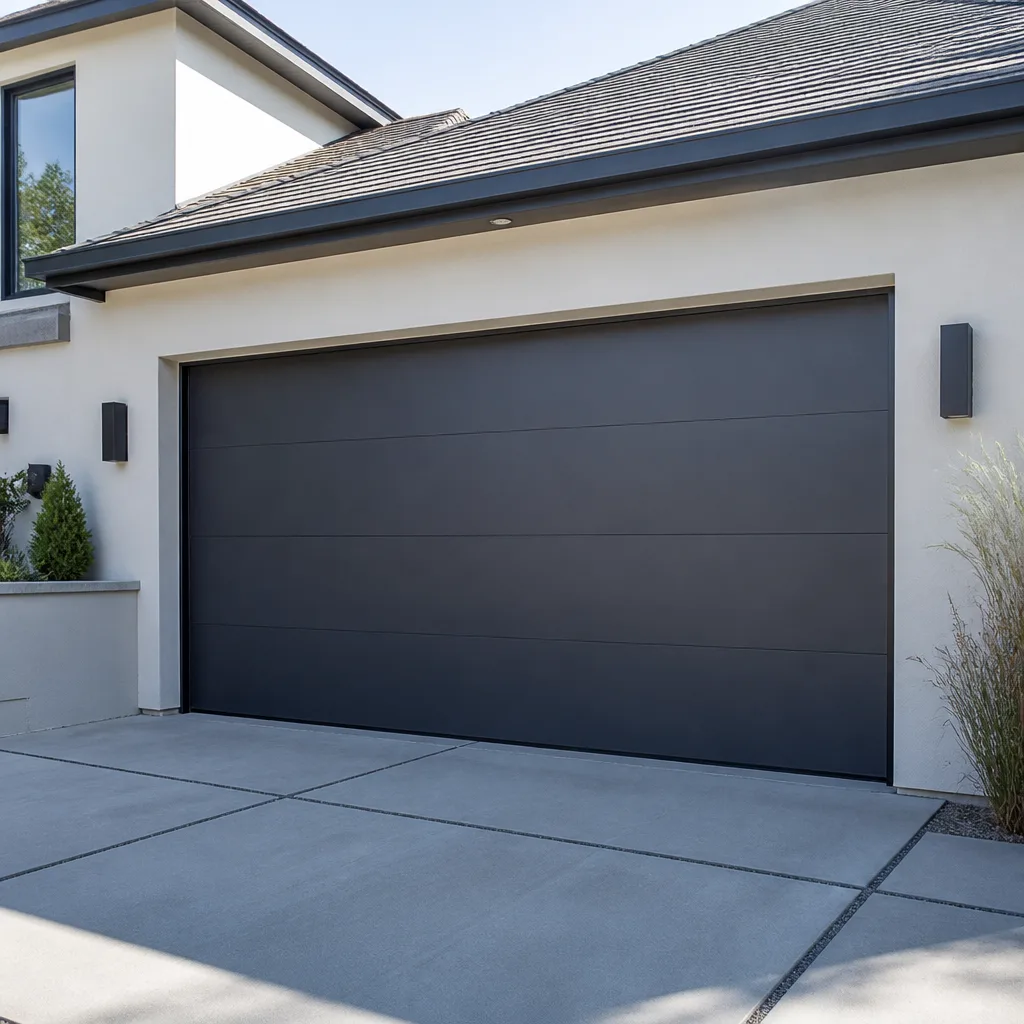 Modern flush
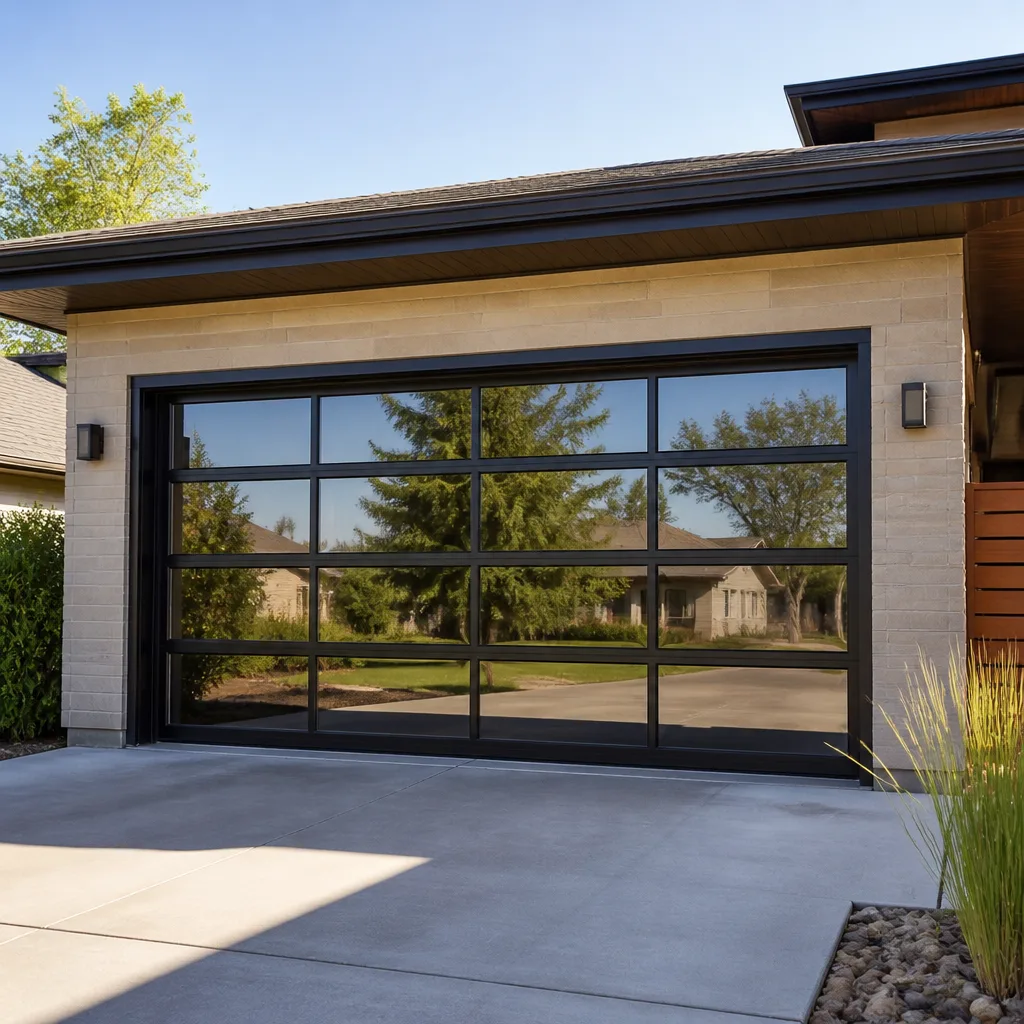 Full-view glass
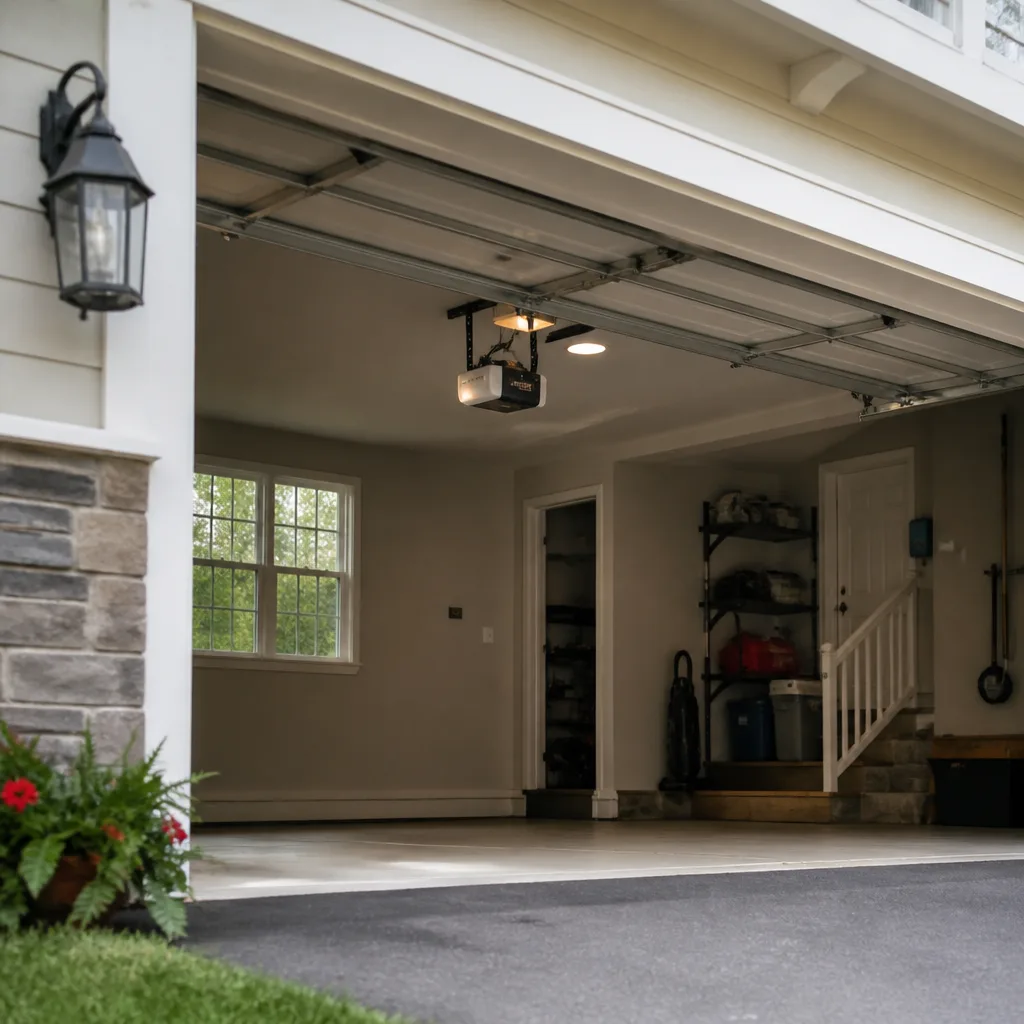 LiftMaster openers
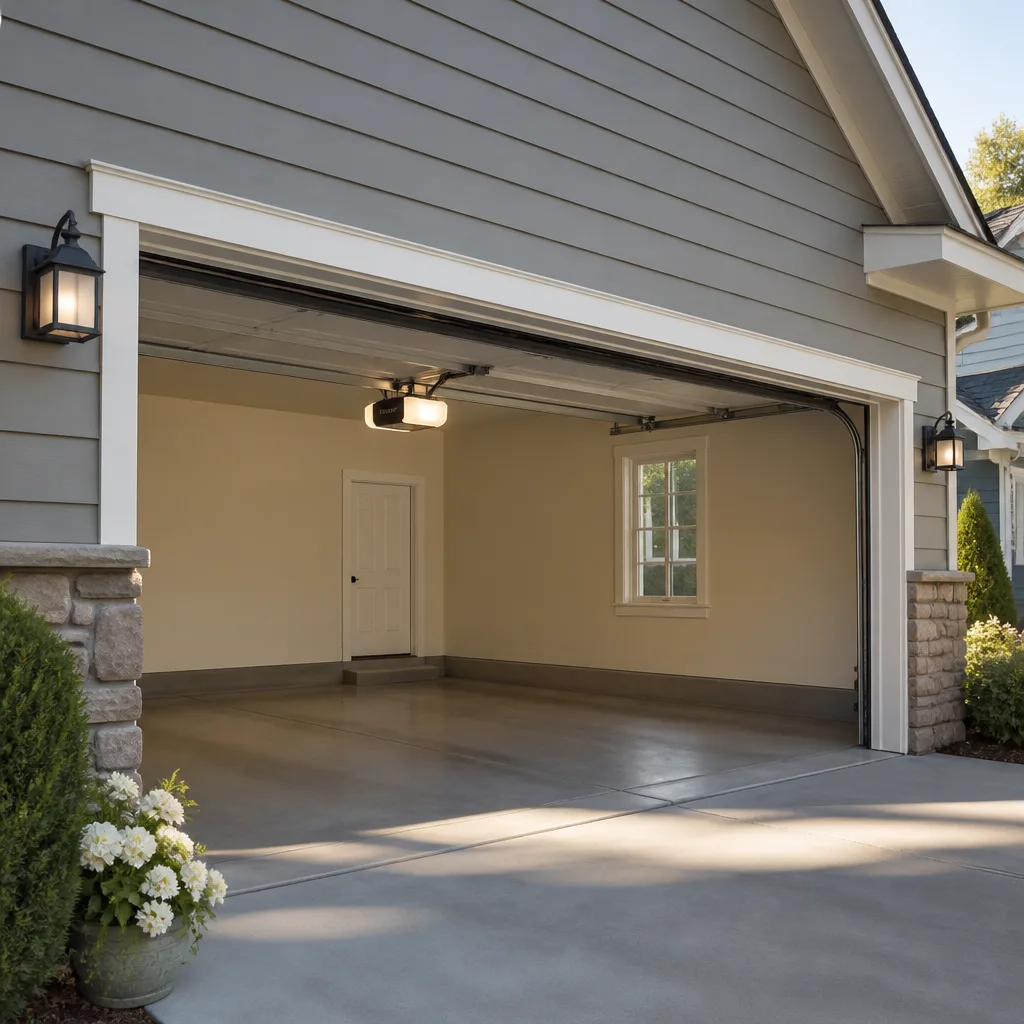 Chamberlain openers
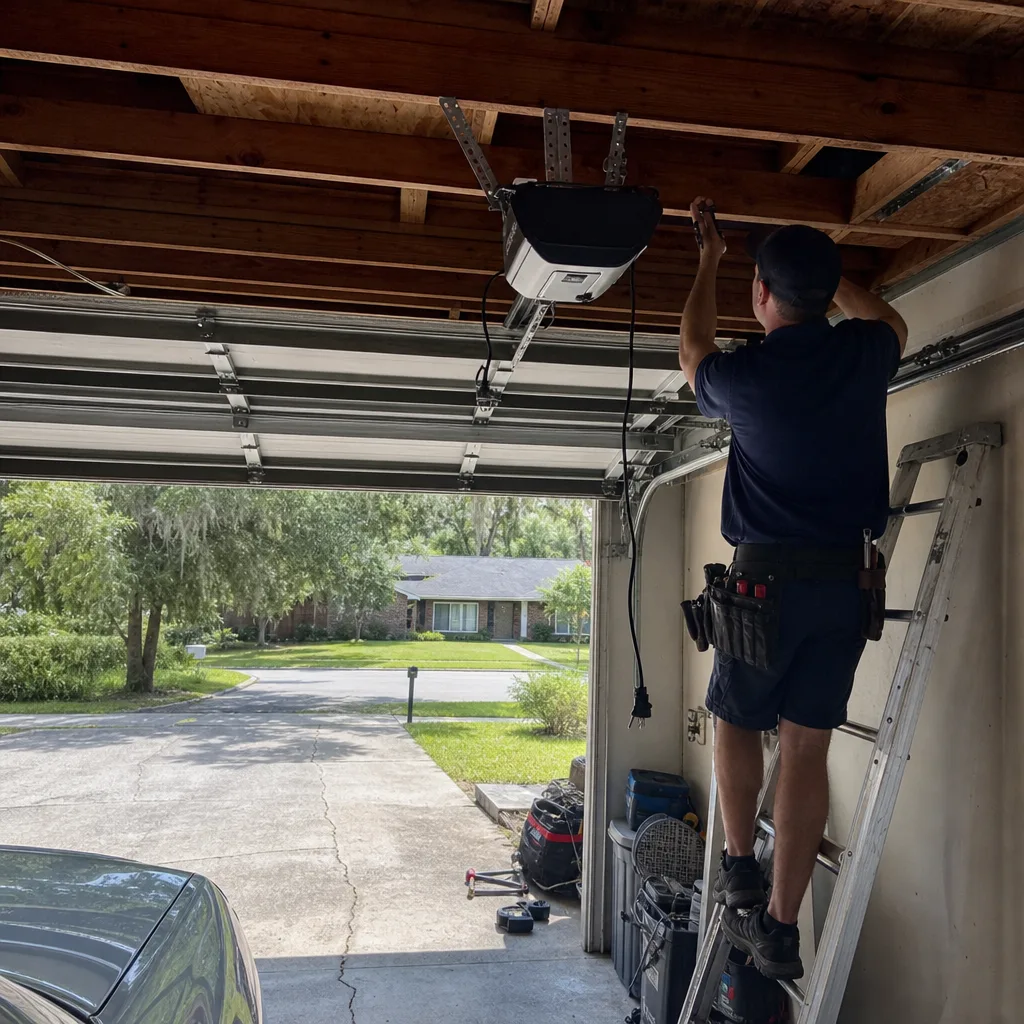
Full 25-point door and opener safety check with every visit - springs, cables, rollers, tracks, and your LiftMaster or Chamberlain opener included
You get a price before we start. It does not change when the pro arrives.
Get your free estimateGarage Door Warning Signs: A Tallahassee Homeowner’s Reference Guide
A garage door that hesitates for half a second before it moves is not “just old.” It’s telling you one of four specific things, and most of them are cheap to fix if you catch them early. The signs that actually matter rarely look dramatic. They show up as a faint rattle on a Tuesday morning, a rust streak near a hinge, or an opener that waits a beat longer than it used to. We’ve watched Tallahassee homeowners dismiss these clues for months until a spring snaps or an opener quits entirely. This guide walks you through how to read your door, what each symptom points to, and when calling a specialist saves you money over guessing.
Quick Answer
The most important garage door warning signs are a half-second hesitation before the door moves, grinding or popping sounds, rust streaks along the panel exterior, a door that reverses without an obstruction, and an opener that responds late or only intermittently. In Tallahassee’s humidity, rust on the door exterior often signals spring or cable corrosion rather than cosmetic wear. Catching these early usually means a small adjustment or repair instead of a full replacement.
Styles & brands we work with
- Raised-panel steel
- Carriage house
- Modern flush
- Full-view glass
- LiftMaster openers
- Chamberlain openers
Table of Contents
- Slow vs. Struggling: Reading the Difference
- Why Rust Streaks Matter More in Tallahassee Humidity
- What Your Door’s Sounds Are Telling You
- Seasonal Symptom Patterns in Tallahassee
- Two Opener Behaviors That Predict Board Failure
- A Visual Checklist You Can Do From the Driveway
- Brand-Specific Signs We Look For
- Common Mistakes to Avoid
- When to Call a Professional
Slow vs. Struggling: Reading the Difference
A slow door and a struggling door look similar from the driver’s seat of your car, but mechanically they are two different problems. A slow door takes its time but moves with consistent effort. A struggling door bounds, jerks, or pauses mid-travel. One points to the opener’s motor or a stretched drive belt. The other usually points to the door’s own balance and hardware.
Here’s how to tell them apart in under a minute:
- Disconnect the opener using the emergency release cord (only with the door in the closed position so it doesn’t drop).
- Lift the door by hand to about waist height.
- Let go gently. A balanced door should hold its position or drift slightly. A door that slams down or rises on its own is out of balance.
- If the door is balanced but the opener still hesitates, the problem is the opener itself, not the door.
- If the door is unbalanced, the issue is springs, cables, or rollers, and running the opener on it wears the motor faster.
In our experience across Tallahassee, more than half of the “my opener is dying” calls turn out to be an out-of-balance door overloading a healthy motor. The opener gets blamed because it’s the noisiest part of the system. Establishing this distinction early saves you from replacing a working motor.
For a slow opener with a balanced door, the likely suspects are a worn drive belt, a failing capacitor, or a stripped gear inside the unit. For a struggling door, the likely suspects are a tired torsion spring, a frayed cable, or binding rollers. Both are fixable, and neither gets better on its own.
Why Rust Streaks Matter More in Tallahassee Humidity
Tallahassee’s humidity is hard on garage doors. Steamy summers push moisture into every seam, and a door that faces west takes the worst of it. Homeowners often see rust streaks near the bottom of the door or along the rails and assume it’s cosmetic. Sometimes it is. But rust in certain locations tells a more serious story.
Pay attention to where the rust appears:
- Rust near hinges and rollers: likely hinge wear or moisture sitting in the joints. Usually a maintenance issue, not urgent.
- Rust streaks on the door face, especially near the bottom panel: can suggest water is trapped behind the panel or in the section joint. Interior panels on insulated Clopay and Amarr doors trap condensation differently than single-panel doors.
- Rust on the torsion tube or along the cable path: this is the one to take seriously. Corroded cables fray from the inside out, and a frayed cable under spring tension is a genuine safety risk.
- Rust around the opener rail: usually means the rail isn’t aligned or the door is binding, forcing the opener to work harder and heat up the rail.
Cable corrosion is the warning sign most often missed in Tallahassee. A door can run normally for months on a partially corroded cable before it fails. The failure happens suddenly and without much warning, so if you see rust along the cable track, that’s the point to call rather than the point to wait. In a humid climate, this is also a routine item we look for during any garage door repair visit.
The safest way to check cables is visual only, from a distance, with the door closed. Never touch, pull, or try to reposition a cable. Torsion springs and cables store enormous energy, and a wound spring can cause serious injury in an instant. This is work for a trained technician with the right tools.
What Your Door’s Sounds Are Telling You
Sound is the earliest signal most doors give, and the type of noise points straight at the component. Four common sounds mean four different things.
- Grinding: metal-on-metal contact. Most often worn rollers, a dry torsion tube, or a bearing plate that has lost its lubrication surface. Left alone, grinding wears the track itself.
- Squealing: usually a dry hinge, roller, or torsion spring. This is the cheapest sound to fix early and the most expensive to ignore. Squealing often goes away with proper lubrication, but a persistent squeal from the spring area may mean the spring is nearing the end of its life.
- Popping: this one deserves immediate attention. A pop from the spring area can mean a spring is about to break, or has partially failed. A pop from the door itself can mean a cable has slipped off a drum. Either way, stop using the door and call a technician.
- Rattling: usually loose hardware. Bolts, hinges, and brackets work themselves loose over time. A rattle that gets worse over weeks is rarely a single loose bolt; it usually means the door is vibrating from imbalance.
On a LiftMaster or Chamberlain opener, a brief rattling at the start of the cycle can be the trolley or the door arm, not the door hardware. On a Genie or Craftsman chain-drive opener, rattling through the whole cycle usually means the chain is loose or the rail is misaligned. Same sound, very different diagnosis depending on the equipment. Our technicians have up to 9 years of experience working with these brands, and the sound a door makes often narrows the diagnosis before the truck even arrives.
Seasonal Symptom Patterns in Tallahassee
Tallahassee’s seasons don’t produce the extreme cold that breaks doors in northern states, but they do produce a recognizable annual pattern. Homeowners who understand it stop being surprised by the same problems every year.
August mornings: doors bind and hesitate. The reason is humidity and heat, not cold. Metal expands, wood doors swell, and rollers dry out faster in the summer. A door that binds in August and runs fine all winter is a door telling you its rollers or hinges are dry and its track has shifted slightly.
December: doors slam faster or drop hard. Cooler air tightens springs and shrinks wood and metal slightly. A torsion spring that was balanced in July may be slightly overpowered or underpowered in December. If the door slams down instead of holding, the spring is losing tension. This is a signal to get the spring checked, not a sign the door is “just cold.”
Late spring: increased pollen and debris along the track. Pollen is fine and harmless in the air, but it collects in the bottom track and rollers. A door that suddenly jerks partway down in April or May often just needs a track cleaning.
Rainy stretches: rust and swelling. Extended wet periods are the gate for the rust issues in the previous section. If your door swells or sticks after heavy rain, get the hardware checked before the problem settles in.
This pattern is one of the reasons we ask Tallahassee homeowners to note the time of year a symptom started. A symptom that appears every August is different from one that appeared in a single week and disappeared.
Two Opener Behaviors That Predict Board Failure
Openers are electronics, and electronics give you a warning before they fail. Two behaviors in particular tend to precede logic board failure, usually 8 to 12 weeks out.
Delayed response: you press the remote and the door starts moving a beat or two later than it used to. Not a failure of the remote, not a dead battery, but a consistent hesitation that grows gradually. This often means the opener’s logic board is struggling to process the signal. On smart-home openers like LiftMaster and Chamberlain myQ models, you may notice the delay more on the app than on the wall button. On a legacy opener, the wall button delay is the tell.
Intermittent operation: the door opens fine, then doesn’t respond at all, then opens fine again. Again, not a battery or remote issue. It’s most often a failing board, a worn capacitor, or a relay that’s beginning to stick. If your door ignores some commands but obeys others with the same remote, the remote isn’t the problem.
Why 8 to 12 weeks? Because a board rarely fails all at once. It fails one input at a time, and each input failure looks small. Homeowners who call in the delay phase usually get a capacitor repair or a board replacement while the rest of the unit is still healthy. Homeowners who wait until failure often find the board has taken other components with it. A quick look at garage door opener repair shows what a technician will check when you describe these behaviors.
A Visual Checklist You Can Do From the Driveway
You don’t need to climb a ladder or handle any hardware to spot most warning signs. This checklist takes two minutes and can be done with the door closed, from the driveway. It’s the same visual scan a technician starts with.
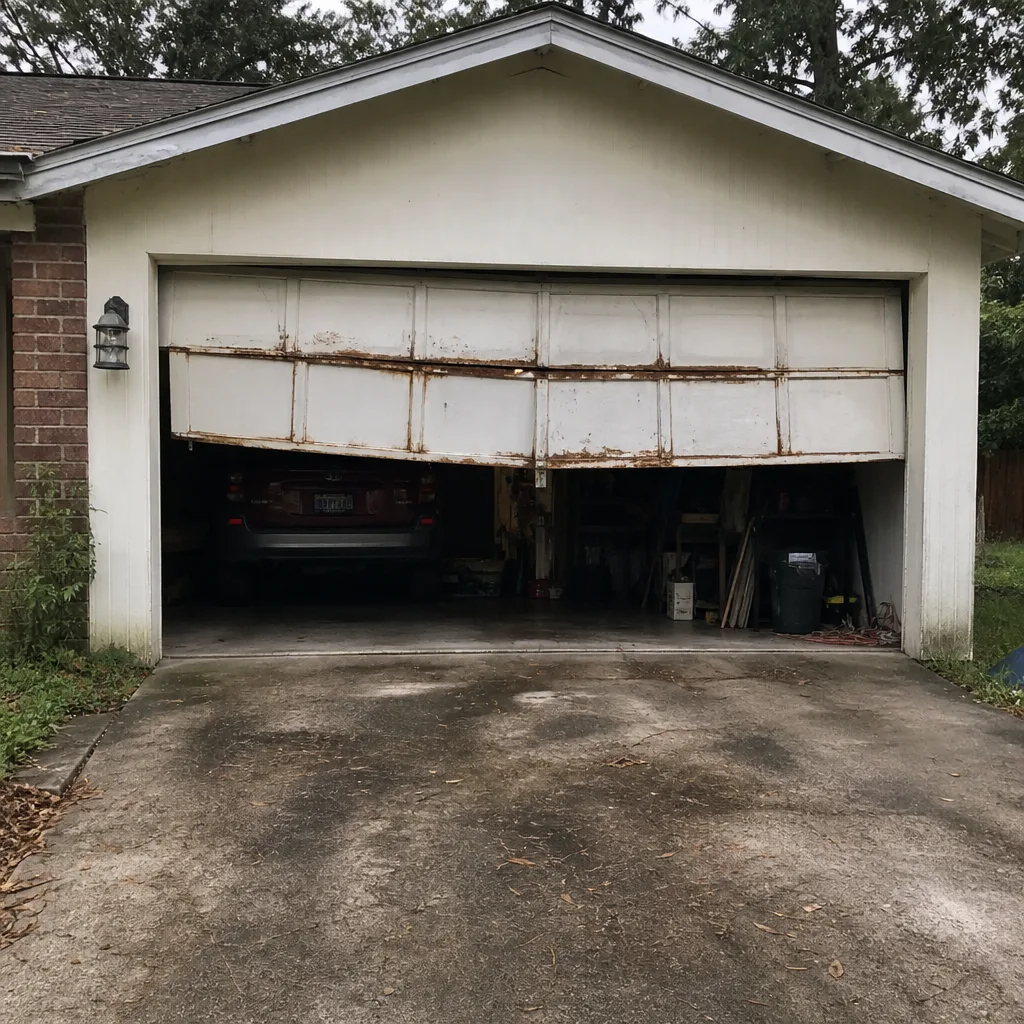
- Look at the door face. Any rust streaks, especially near the bottom or along section joints? Are the panels level, or has one shifted? Do you see daylight coming through the seams where you didn’t before?
- Look at the tracks. Both rails should look parallel and straight. Any bend, kink, or loose bracket is a warning sign, not a cosmetic one.
- Look at the springs. If you have a torsion spring (above the door on a metal tube), look for visible gaps or a stretched section. Don’t touch it. A gap in a torsion spring means it has broken or is about to break.
- Look at the cables. From a distance, check for fraying, rust, or cable that has come off its drum.
- Look at the opener rail. Is it straight? Any sag or misalignment? Is the trolley car pushing against the door without moving it?
- Look at the safety sensors (the small electric eyes near the floor on each side of the door). Are they aligned, clean, and unobstructed?
- Watch a full open and close cycle. Note any hesitation, jerk, or pause. Time the full cycle roughly. If it’s noticeably slower than it used to be, that’s your information.
If your door is a Clopay or Amarr with multiple sections, check the hinges between panels. Those are the first joints to loosen and the first to show rust. If it’s a Wayne Dalton or Craftsman steel door, check the bottom section for moisture creeping under the seal.
Brand-Specific Signs We Look For
Different door and opener brands have different failure patterns, and knowing the brand can speed the diagnosis. Our technicians work regularly with LiftMaster, Chamberlain, Genie, Clopay, Amarr, Wayne Dalton, Craftsman, and Raynor. A few notable patterns:
- LiftMaster and Chamberlain myQ: intermittent app response often points to a connectivity issue before it points to hardware. If the wall button works but the app doesn’t, the board may still be healthy.
- Genie: chain-drive units are prone to chain slack that shows up as rattling through the whole cycle. Delayed response on older Genie models is often the capacitor.
- Craftsman: many units from the older generations use a logic board design that fails with a specific intermittent pattern before total failure. The intermittent behavior in the previous section is a reliable early indicator on these.
- Raynor: torsion spring failures on some Raynor models start with a noticeable sound change before the spring actually breaks.
- Clopay and Amarr: insulated multi-panel doors trap moisture differently than single-skin doors, so we look harder at joint rust on these.
- Wayne Dalton: some models use proprietary spring or cable hardware that affects replacement timing. Getting the specific model matters.
When you call, tell us the brand and, if you know it, the model. It makes the first visit count for more. Full-spectrum capability under one company means we can diagnose the opener, the door, the spring, or the installation all in one visit if need be. That’s what we mean by one call, full fix.
Common Mistakes to Avoid
- Treating a slow door as “just old.” A hesitation is a signal, not a personality trait. Waiting often means an $80 adjustment becomes a $300 repair.
- Ignoring rust on cables because it “looks cosmetic.” Rust on the door face can be cosmetic. Rust on the cable path is not, and a failed cable under spring tension is dangerous.
- Lubricating a torsion spring or cable yourself. Spring and cable work is the highest-risk part of garage door repair. Never touch, pull, or adjust a spring, even to “help it along.”
- Running an unbalanced door on the opener. Even a healthy opener will wear faster turning an unbalanced door. In Tallahassee humidity, the wear accelerates.
- Replacing the remote instead of diagnosing the opener. If the wall button also fails intermittently, the remote isn’t the problem. Save the money and diagnose the source.
- Skipping the annual visual check. Two minutes on the driveway once a year catches most of the signs in this guide before they cost real money.
- Calling a generalist for a spring or cable problem. Spring repair is a dedicated specialty. A general handyman working outside their training on torsion springs is a safety risk to you and to them.
Our dedicated spring repair service exists because spring work is one of the highest-risk repairs in the trade and one of the most commonly botched. You don’t want someone learning on your door.
See the difference
 Before
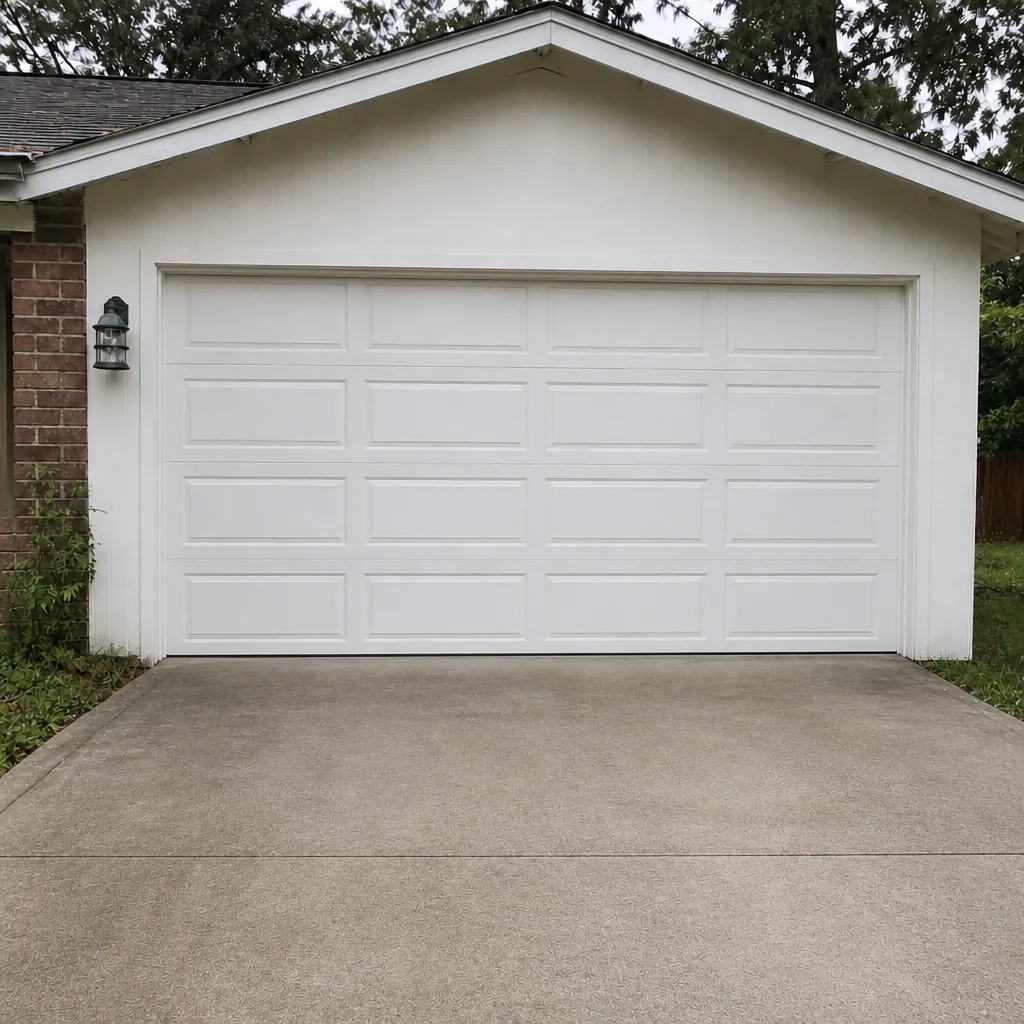 After
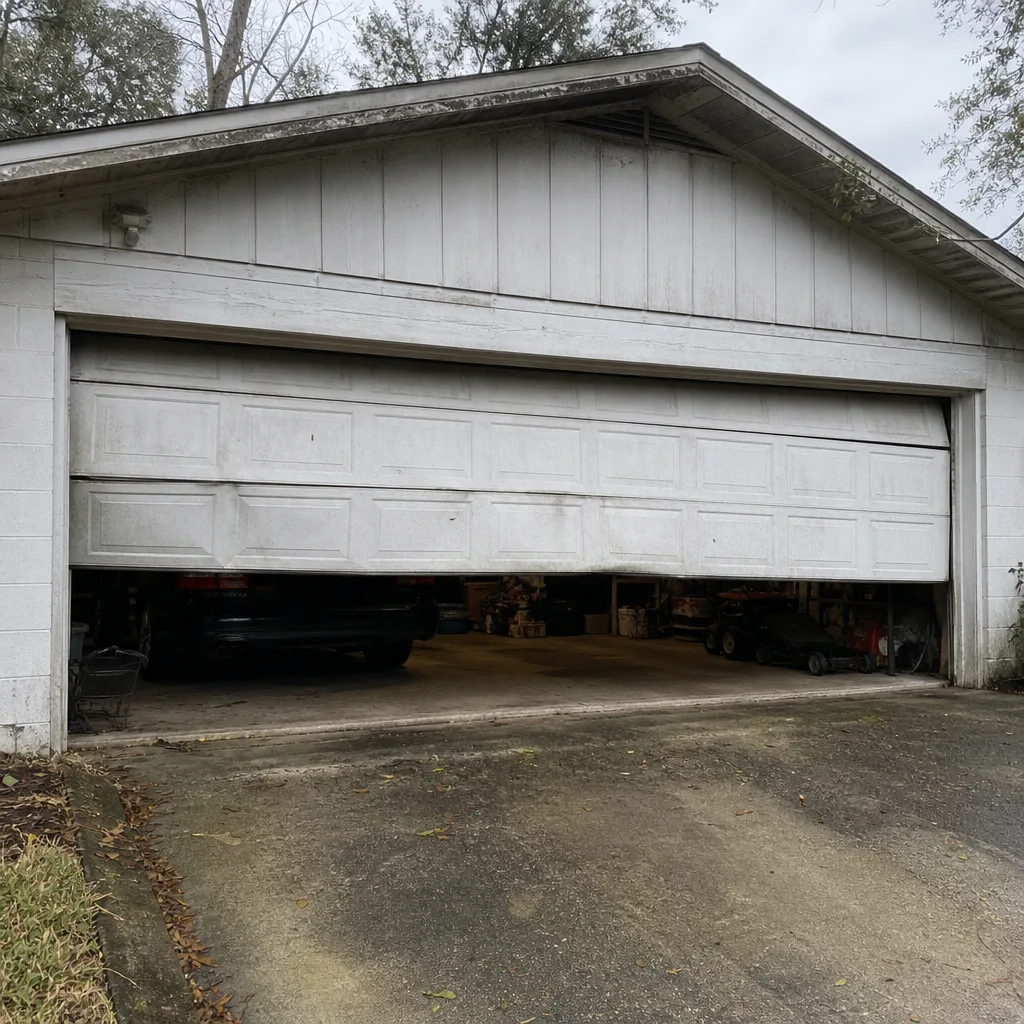 Before
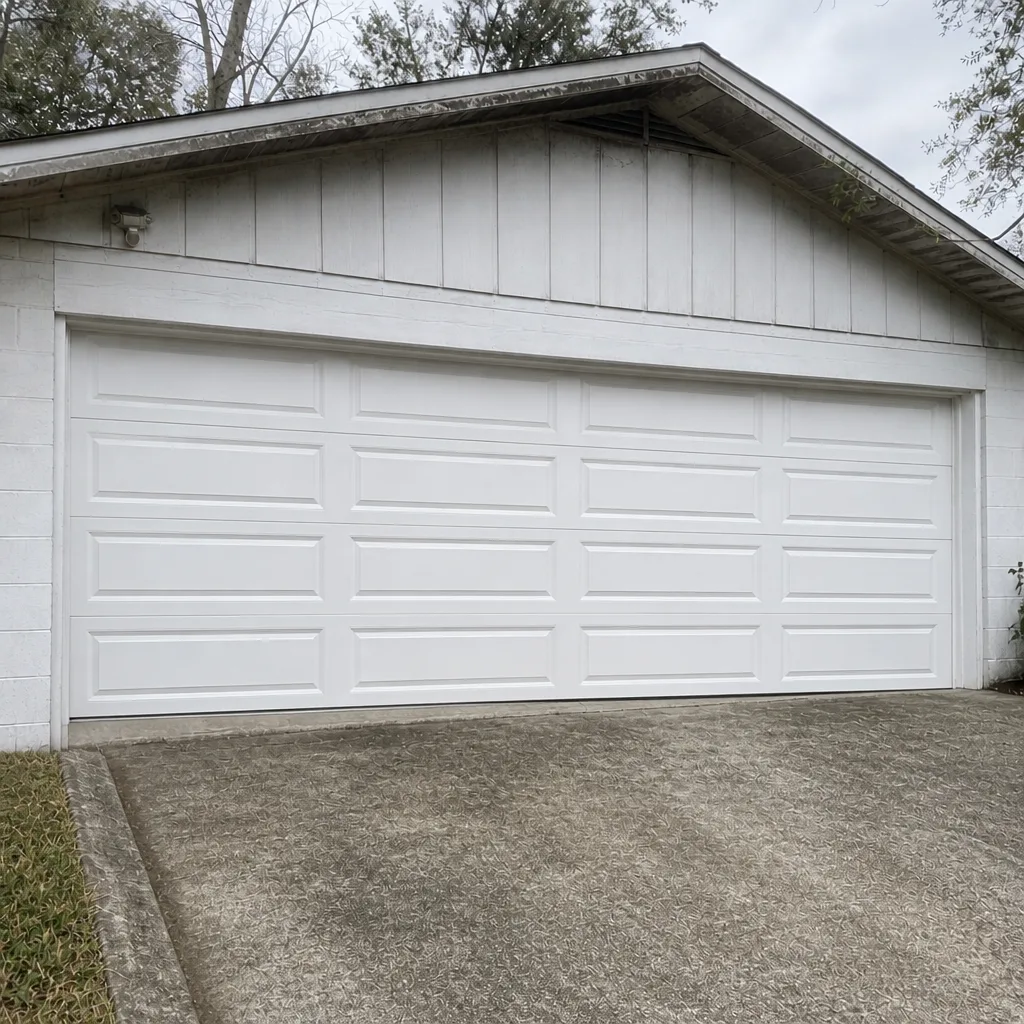 After
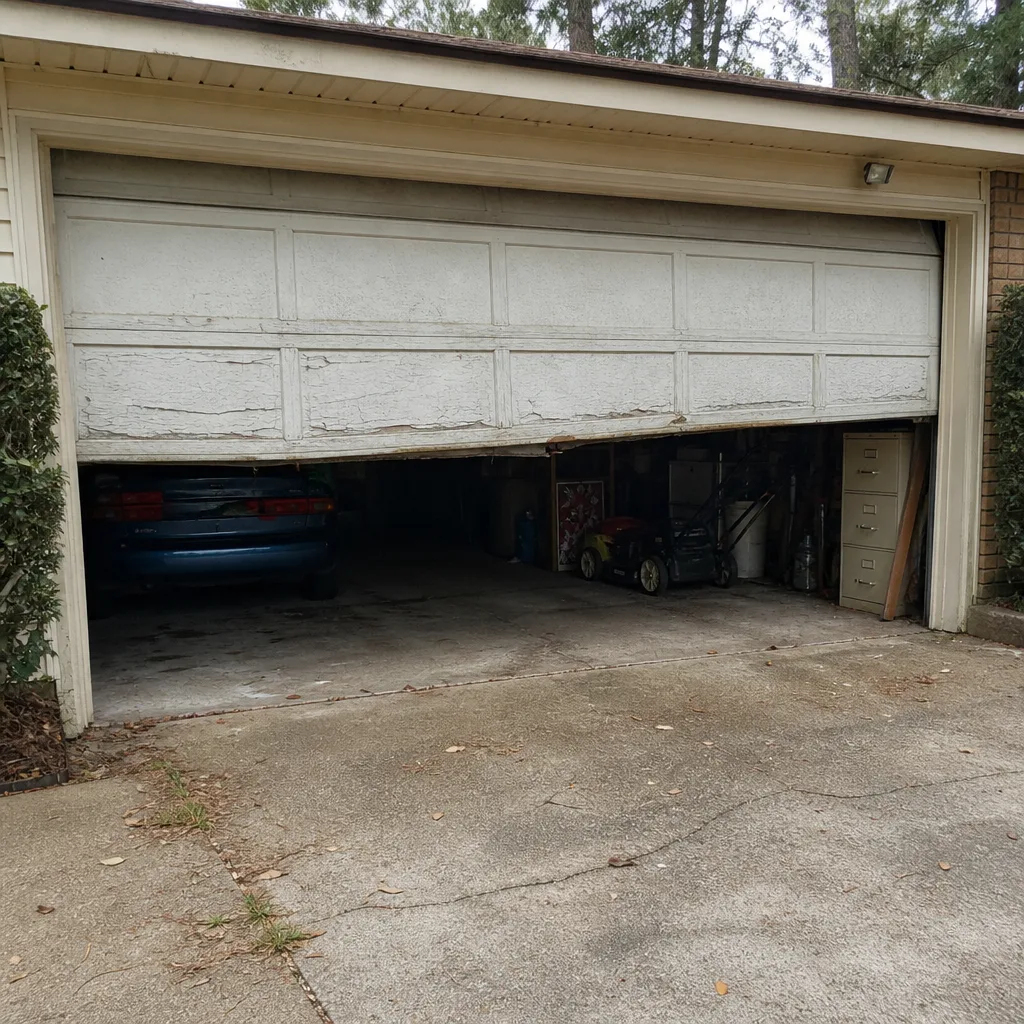 Before
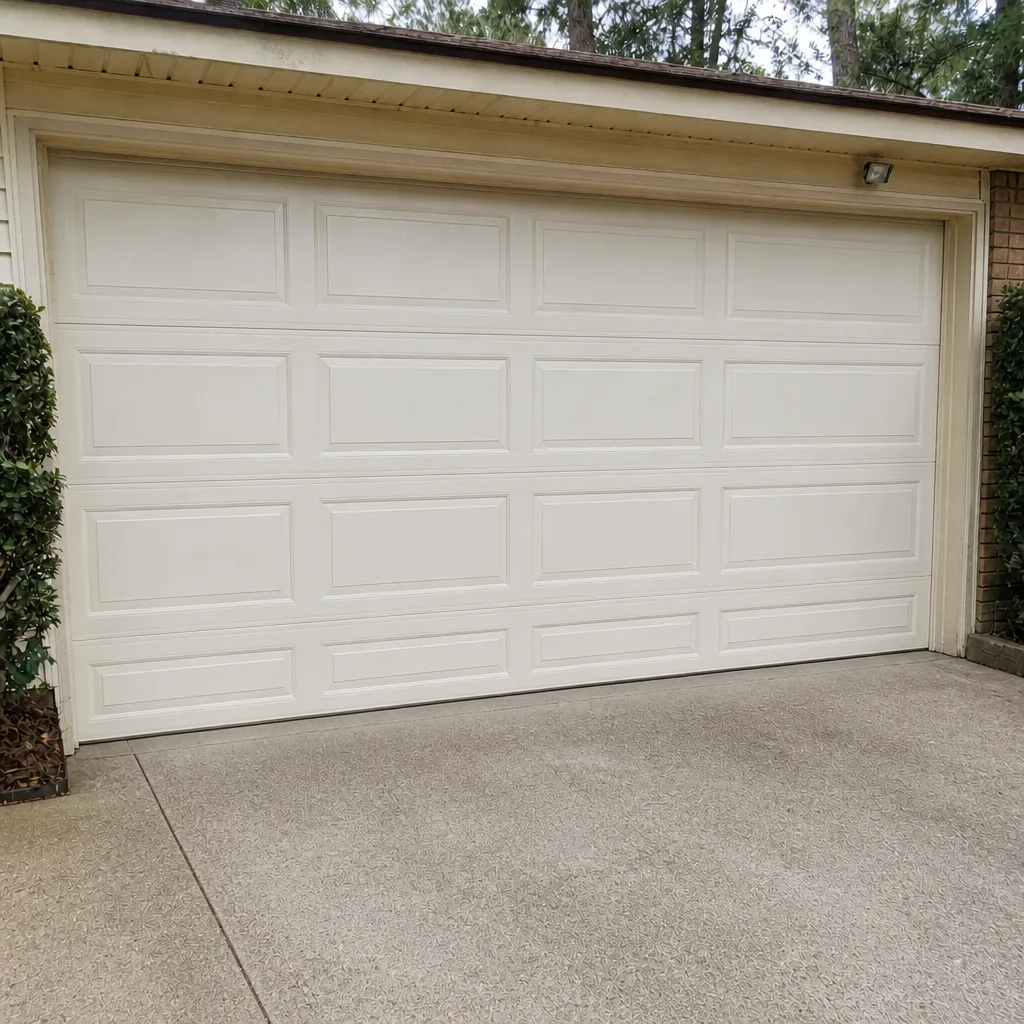 After
When to Call a Professional
Some signs are a call-now situation: a popping sound from the spring area, a visible gap in the torsion spring, a frayed or off-drum cable, a door that’s come off its track, a door that reverses without an obstruction, or an opener that has stopped responding entirely. Any of these is a stop-using-the-door situation. Others are call-soon: consistent hesitation, rust on the cable track, an opener that hesitates or responds intermittently, a door that binds every August, or a door that slams in December.
A visual scan once a year prevents most of the call-now situations from ever happening. If you’ve done the driveway check and something looks off, get it looked at. Small adjustments are far cheaper than emergency replacements.
Tallahassee Garage Door Repair Experts offers free estimates in Tallahassee, and our technicians have up to 9 years of experience diagnosing exactly the patterns in this guide. For an urgent issue, we also offer emergency garage door service for time-sensitive failures. Call (844) 443-3895 for a free estimate. The price you agree to before any work starts is the price on the final invoice.
Frequently Asked Questions
The most common early signs in Tallahassee are a hesitation before the door moves, rust streaks along the door face or cable path, grinding or squealing from the tracks, and an opener that responds late or only intermittently. Because of Tallahassee’s humidity, rust on the cable or spring area is more significant here than in drier climates.
No, we are closed on Saturday. We are open Sunday through Friday, 7am to 7pm. If your door fails on a Saturday, call and we’ll book you for Sunday. If it’s a genuine safety emergency like a door off its track, keep the door down and call (844) 443-3895 – we’ll be in touch as soon as we’re open.
Spring repair in Tallahassee is quoted per job, and the written estimate is the final price. A single spring replacement is one service; a matched pair replaced together costs more than a single spring because both are being replaced. We always confirm the price before any work starts so there are no surprises on the invoice. Call (844) 443-3895 for an exact quote – estimates are free.
Yes, but the seasons in Tallahassee work against an unmaintained door in a way that northern climates don’t. August humidity dries out rollers and swells wood doors. December cool air tightens springs. A two-minute visual check once a year catches the early signs and keeps the door running smoothly through both.
A logic board usually fails with two warning signs: a delayed response to the remote that gets gradually longer, and intermittent operation where the door responds to some commands and ignores others. These two behaviors typically appear 8 to 12 weeks before the board fails completely. If you notice either, get it checked.
No. A torsion spring under tension stores enough energy to cause serious injury, and winding or unwinding one without the right tools and training is dangerous. Even touching a partially broken spring is risky. This is work for a trained technician. Our dedicated spring repair service exists because we don’t want homeowners taking this on.
Stop using it immediately. Don’t force the opener, don’t try to push the door back into position, and don’t run the door by hand. Keep clear of the door and call a professional. A door off its track can fall without warning, and a technician can re-track it safely. Call (844) 443-3895 for an emergency response.
They help speed the diagnosis. Our technicians regularly work with LiftMaster, Chamberlain, Genie, Clopay, Amarr, Wayne Dalton, Craftsman, and Raynor, and each brand has its own failure patterns. When you tell us the brand and model, we know what to look for before we arrive. Whether you need a repair or a full replacement, see garage door installation for what happens when a door reaches the end of its service life.
A slow door takes its time but moves with consistent effort, pointing to the opener’s motor or drive belt. A struggling door bounds, jerks, or pauses mid-travel, pointing to the door’s own springs, cables, or rollers. To test which you have, release the opener and lift the door by hand. If it’s out of balance, the door is struggling. If it’s balanced and the opener still hesitates, the opener is the problem.
The local pros we connect you with are licensed and insured as their state requires. Our technicians have up to 9 years of experience diagnosing garage door and opener issues. When you call, we confirm what’s covered before any work starts. Call (844) 443-3895 for a free estimate.
The Bottom Line
The warning signs that matter most in Tallahassee aren’t the obvious ones. They’re the half-second hesitation, the rust along the cable path, the seasonal bind in August, the opener’s delayed response. Each one points to a specific component, and each one is much cheaper to fix early than after a full failure. Do the two-minute driveway check once a year, note the season a symptom starts, and call at the first sign of a spring or cable issue rather than waiting for the slam. Our team handles garage door repair, spring work, opener repair, and installation for homeowners across Tallahassee, and we’re reachable at (844) 443-3895 for a free estimate. If you’re unsure about a sign you’ve spotted, Tallahassee garage door experts are one call away. And for a deeper look at the door side of things, our garage door repair guide covers what a technician checks on a first visit.
Written by the team at Tallahassee Garage Door Repair Experts.